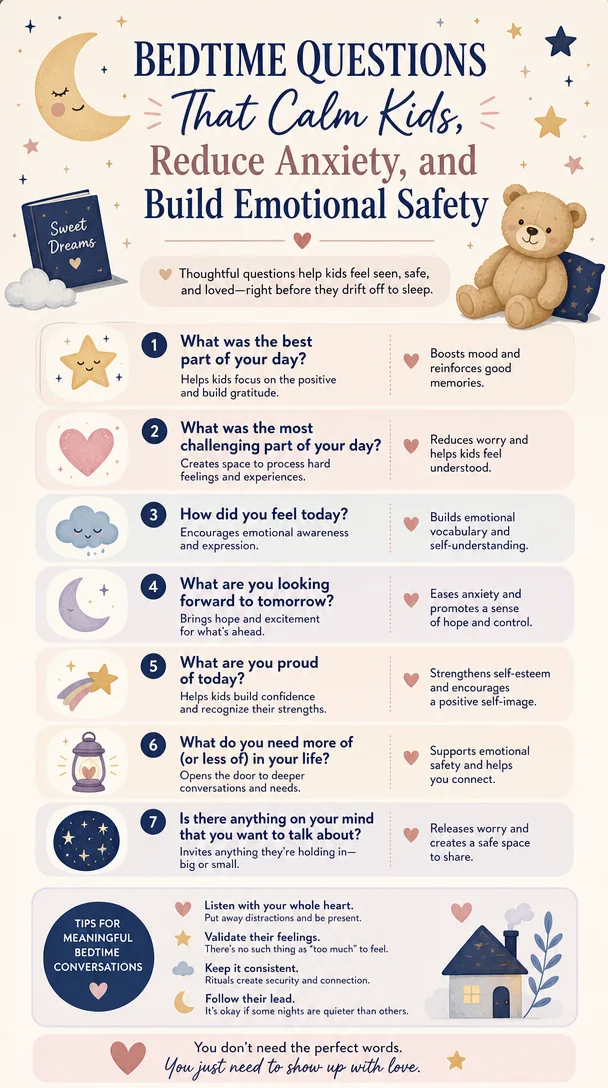
Bedtime Questions That Calm Kids, Reduce Anxiety, and Build Emotional Safety
Calm Bedtime Questions to Reduce Anxiety and Build Emotional Safety
Meta Description
Discover bedtime questions that calm kids, reduce anxiety, and foster emotional safety. Create meaningful connections during your nightly routine!
Introduction
As the day winds down and the night settles in, you might find yourself facing one of the most challenging aspects of parenting: bedtime. The flurry of activities, the struggle to create a calm environment, and the endless questions from your little ones can make this time feel more chaotic than serene. But what if I told you that the right bedtime questions could transform those tense moments into opportunities for connection and emotional safety?
Imagine tucking your child in, breathing a sigh of relief, and knowing that you’ve helped them process their day and release any lingering worries. Crafting a peaceful bedtime routine that includes thoughtful questions isn’t just a great way to end the day—it’s also a loving act that nurtures their emotional well-being.
In this post, we’ll explore bedtime questions that not only calm kids but also build their emotional intelligence, giving them the tools they need to navigate their feelings. Let’s dive into this journey of creating a nurturing bedtime atmosphere together!
Why Bedtime Questions Matter
Building Emotional Safety
Children thrive when they feel safe to express themselves. Asking thoughtful questions at bedtime fosters an environment where kids can open up about their feelings. This practice helps them navigate anxiety and uncertainty, paving the way for emotional resilience. It’s also a fantastic opportunity to instill the value of communication in a friendly and supportive manner.
Encouraging Reflection
Bedtime questions offer a gentle nudge for kids to reflect on their day. This reflection helps them make sense of their experiences, cultivating emotional intelligence. It creates an important moment for them to acknowledge their feelings, whether they were happy, sad, or somewhere in between.
Strengthening Connection
Even when the day feels long and exhausting, bedtime provides a magical moment for connection. When parents show genuine interest in their child’s thoughts and feelings, it deepens trust and strengthens the parent-child bond. You’ll find that these conversations can strengthen your relationship in profound ways.
Thoughtful Bedtime Questions to Ask
1. “What was the best part of your day?”
This question encourages positivity and gratitude. It invites children to reflect on their happy moments, allowing them to end the day on a cheerful note. You might hear things like, “I loved playing with my friend” or “We made pancakes together!”
Tip: Share your own favorite moment of the day to encourage reciprocal sharing.
2. “Was there anything that made you feel sad today?”
Acknowledging tough feelings is important for emotional growth. By giving your kids space to express any sadness, you validate their emotions and let them know it’s okay to feel that way. Sometimes, your little one might feel safe enough to talk about a disagreement with a friend or a fall on the playground.
Tip: Use active listening and encourage them by sharing that everyone has tough days sometimes.
3. “What are three things you are thankful for?”
This question pushes kids to focus on gratitude. It helps shift their mindset towards the positive, which can be a wonderful way to ease any nighttime anxiety. Responses might include family, friends, or even their toys!
Tip: Encourage them to be specific (“I’m thankful for Grandma’s cookies”) to help deepen their understanding of gratitude.
4. “Is there anything you’re worried about?”
Running through worries can happen at any age. By creating a safe space for your child to voice any concerns, you help alleviate anxiety and foster emotional safety. Kids might express worries about school or activities, allowing you to reassure them.
Tip: Let them know it’s okay to feel worried, and share strategies together on how to handle those feelings.
5. “What did you learn today?”
This question reinforces the importance of learning and curiosity. It encourages your child to reflect on both formal and informal experiences, which promotes a love of learning. They might discuss something related to school or discover the joy of trying something new—like riding a bike!
Tip: Celebrate any learning moments to inspire them to keep exploring.
Creating a Soothing Bedtime Routine
Beyond the questions, consider building a comprehensive bedtime routine that enhances emotional safety and calmness. Here’s how to do it:
Start with a Cozy Atmosphere
Set the right mood by dimming the lights, playing soft music, or reading peaceful bedtime stories. Create an inviting space that encourages your child to wind down.
Implement a Consistent Schedule
Kids respond well to routine. Aim for a consistent bedtime each night, which helps establish a sense of security. Incorporating calming activities, like drawing or gentle stretches, can ease them into sleep mode.
Include Relaxation Techniques
Introduce simple methods for relaxation. You might teach your child to take deep breaths, visualize a happy place, or even practice gentle yoga poses. These skills can be incredibly valuable during moments of anxiety.
Offer a Comfort Object
Consider allowing your child to snuggle with a favorite stuffed animal or blanket. Familiarity provides comfort and emotional security, helping them feel safe as they drift off to sleep.
Encouraging Emotional Literacy with Fun Activities
Can you imagine giggling together while learning about emotions? Here are a few fun, screen-free activities to help improve your child’s emotional literacy while making bedtimes memorable:
1. Emotion Charades
Play a fun game of charades using emotions. Your child can express emotions like happiness, sadness, or anger through actions while you guess what they are displaying. This encourages empathy and understanding.
2. Feelings Journal
Create a special feelings journal where your child can draw or write about their day. This not only provides an outlet for their emotions but also sparks conversation during bedtime.
3. Emotion Bingo
Make a bingo card with different emotions. As you play, discuss scenarios that might make someone feel that way. It can be a playful method to dig deeper into emotional understanding.
4. Create a “Feelings Suncatcher”
Use colorful tissue paper and a window cling to make a suncatcher that represents different feelings. Hang it where they can see it in the morning to remind them of emotional awareness.
Warm Conclusion
Successfully navigating bedtime is a challenge we face as parents, but with thoughtful questions and calming routines, we can create a space that encourages emotional safety and connection. Remember, it’s not about achieving perfection—it’s about being present and showing love in the small moments.
So, the next time you tuck your little one in, take a breath, embrace the cozy chaos, and ask them a question that opens up their heart. You might be surprised by the connections you forge and the lessons you learn along the way.
Embrace these precious moments and remember: parenting is a journey we take together, one gentle conversation at a time. You’ve got this!
FAQ Section
Q: How can I help my child if they are resistant to answering bedtime questions?
Encourage them gently and assure them that it’s a safe space. Sometimes starting with your own answers can help them feel more comfortable.
Q: What if my child has trouble expressing their feelings?
Try using visual aids or books that discuss emotions. You might also model how you express your own feelings to encourage them.
Q: Can I ask different questions each night?
Absolutely! Feel free to mix things up based on their day and mood. It keeps it fresh and engaging for both of you.
Q: How can I make bedtime more enjoyable for both of us?
Incorporate a fun story, a calming ritual like a warm bath, or even a funny song. Personalizing go-to routines can turn bedtime into a cherished moment.