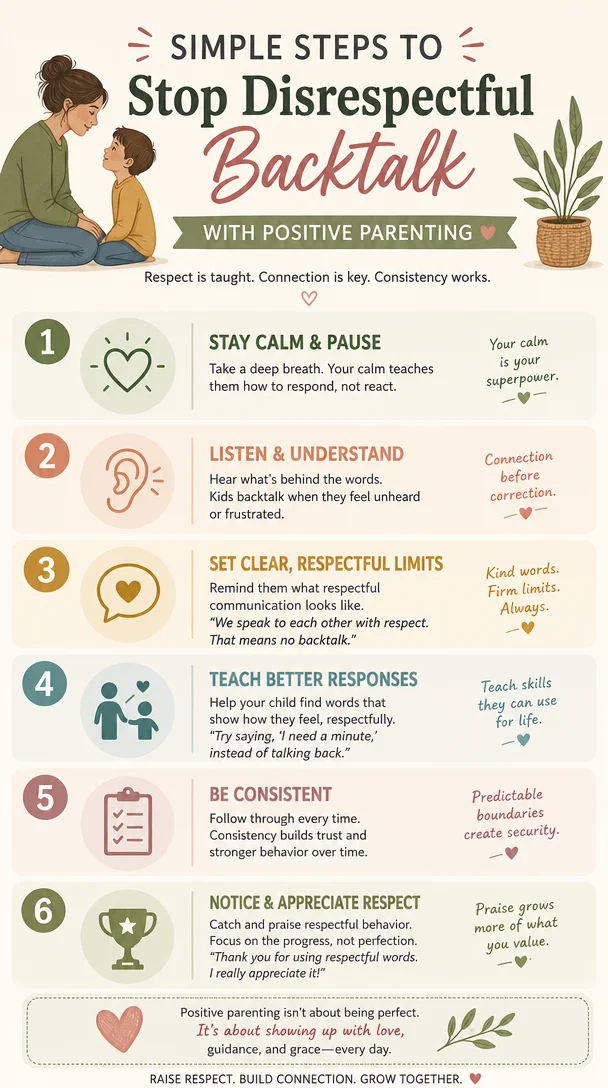
Simple Steps to Stop Disrespectful Backtalk With Positive Parenting
6 Steps to Handle Disrespect and Backtalk Using Positive Parenting
Meta Description: Struggling with disrespectful behavior from your kids? Discover 6 powerful steps to address backtalk with positive parenting strategies that encourage growth.
Introduction
Ah, the infamous backtalk! When your sweet little one suddenly decides to unleash their inner sassy pants, it can feel like a scene straight out of a reality show. One moment, you’re enjoying a peaceful afternoon snack, and the next, you’re wading through a sea of attitude as they boldly challenge your every word. Sound familiar?
Dealing with disrespect can leave any parent feeling frustrated, helpless, and unsure of how to respond. Yet, here’s the good news: you’re not alone in this parenting journey, and there are ways to shed light on this tricky behavior! Let’s explore six steps to handle disrespect and backtalk using positive parenting techniques that create space for learning, understanding, and growth—a gentle reminder that parenting doesn’t have to be about perfection, but about connection.
Understanding the Roots of Disrespectful Behavior
First, it’s essential to recognize that backtalk often stems from a child’s need to express themselves and test boundaries. Kids don’t always have the vocabulary or experience to communicate their feelings appropriately. Sometimes frustration bubbles up, and they lash out, not because they want to hurt you, but because they are still figuring out the world around them.
H2: Step 1: Stay Calm and Take a Breath
When your child throws a verbal curveball your way, it’s easy to react instinctively out of frustration. Yet, taking a moment to breathe can change the entire dynamic of the situation. Instead of getting wrapped up in emotion, and allowing anger to dictate your response, pause for a second. Count to three, inhale deeply, and exhale slowly.
This moment of calm clears your mind and creates space for a thoughtful response. Remember, modeling emotional regulation teaches your child valuable lessons on handling feelings.
H2: Step 2: Acknowledge Their Feelings
Instead of dismissing your child’s attitude, take a moment to acknowledge their feelings without judgment. Say something like, “I can see you’re feeling pretty upset. It’s okay to feel that way.” By validating their emotions, you’re showing empathy and letting them know it’s okay to express themselves—even if the words aren’t coming out in the best way.
You create an opening for them to share what’s bothering them. This approach builds connection and understanding, which is vital for their emotional development.
H3: Practice Empathetic Responses
After acknowledging their feelings, you can say something like, “I understand that you’re frustrated because you want to watch just one more video before dinner. It can be really hard to stop when you’re having fun!” This kind of response makes it easier for them to feel understood, reducing the chance of further backtalk.
Step 3: Set Clear Expectations
It’s essential to ensure your child knows the boundaries surrounding respectful communication. Take the time to explain what you expect in terms of their language and behavior. It’s not just about telling them what not to do; it’s also about illustrating the positive way to communicate.
H2: How to Set the Stage
-
Use Role-Playing: Engage your child in role-playing different scenarios. You can act out certain situations where they can practice responding respectfully. This hands-on approach fosters understanding.
-
Consistent Reminders: Reinforce the expectations gently but firmly. Remind them before situations that might trigger backtalk—like group settings or family meals.
Step 4: Use Natural Consequences
When possible, let natural consequences take the lead. If a child chooses to talk back or disregard your request, allow the result of their choices to unfold (while ensuring their safety). If they don’t finish lunch because they’ve been disrespectful and refuse to eat, remind them calmly that they may feel hungry later on.
Consequences teach lessons without your having to ‘punish’ them. They’ll come to realize the importance of kindness and respect as they navigate these moments.
H3: Example Scenario
Imagine your child repeatedly interrupts during a family conversation. Instead of raising your voice, calmly say, “I can see you have something to share, but interrupting isn’t helpful. If you want to share your thought, let’s wait for your turn.” This way, they learn the importance of patience and listening.
Step 5: Reinforce Respectful Communication
Celebrate small wins! When your child expresses themselves respectfully or handles their emotions better, praise them for their efforts. Use phrases like, “I loved how you expressed your feelings without yelling. That was really mature!”
Positive reinforcement helps solidify respectful behaviors over time. Kids experience a joy in knowing that they made the right choice, encouraging them to keep it up.
H2: A Quick Tip
Create a family praise jar. Each time your child does something commendable—like resolving a conflict with respect—drop a note in the jar. At the end of the month, take time as a family to read them together and celebrate those moments!
Step 6: Model Respectful Behavior
Kids learn by observing, so showing respect in your daily interactions—including with them—is crucial. Make a habit of speaking with kindness and consideration, even during challenging moments.
H3: Everyday Examples
-
Use “Please” and “Thank You”: Using polite language teaches them the art of respect and gratitude.
-
Listen Actively: When they talk, make eye contact and show that you value their words. Respond back thoughtfully, even if it’s silly kid talk.
Conclusion
Handling backtalk isn’t just about correcting behavior; it’s about instilling strong communication skills and emotional intelligence within our children. By utilizing these six steps—remaining calm, acknowledging feelings, setting clear expectations, allowing natural consequences, reinforcing respectful communication, and modeling respect—you set the tone for how your family interacts.
Parenting is undeniably a mix of beautiful, messy moments, and at times, it can feel overwhelming. But remember, every small step counts, and these challenges today help shape kind, confident kids for tomorrow. The next time you face a moment of backtalk, take a deep breath, implement one of these strategies, and remind yourself that you’re doing an amazing job. You’ve got this!
Optional FAQ Section
Q1: What if the backtalk continues despite following these steps?
A: If disrespect persists, consider talking with them about why they feel compelled to respond that way. Sometimes underlying issues need to be addressed.
Q2: How can I incorporate these strategies into everyday interactions?
A: Integrate small reminders during daily routines—like during meal times or play—to practice open communication and respectful behavior.
Q3: Can screen time cause more backtalk?
A: Yes, excessive screen time can overstimulate and lead to frustration. Establishing boundaries around screen time and promoting healthy play can contribute to calmer interactions.
When it comes to parenting, remember that every day presents new opportunities to teach and learn. You have the strength and wisdom to guide your children with kindness, love, and patience. Keep shining, fellow parent!