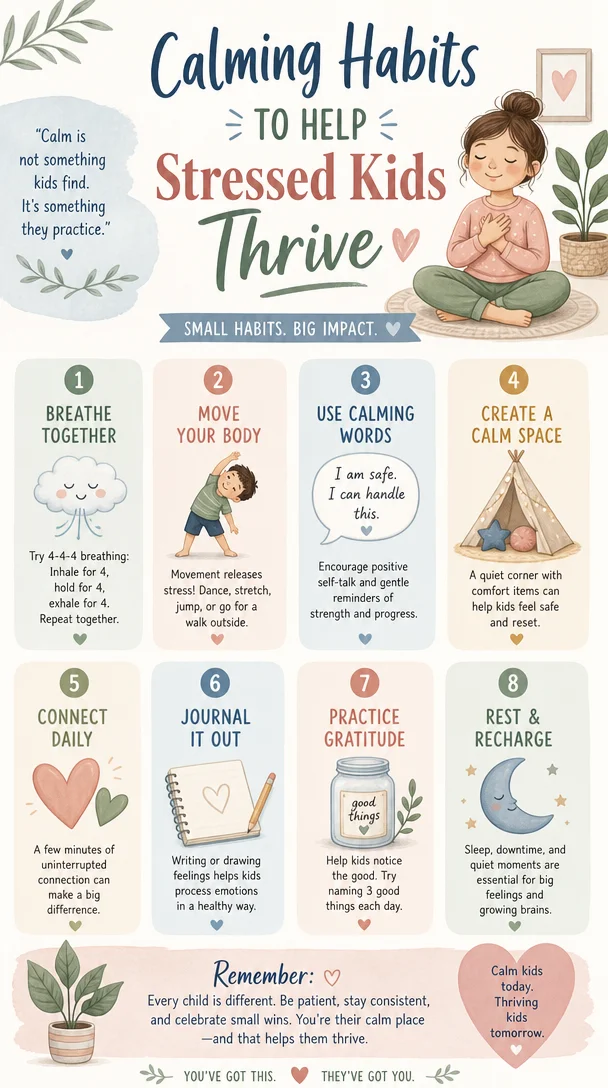
Calming Habits to Help Stressed Kids Thrive
How to Help Stressed Kids: 5 Simple Changes to Reduce Anxiety
Meta Description
Discover five easy parenting changes to help reduce stress in kids. Create a calmer, happier home with practical tips for a more balanced family life.
Introduction
As parents, we all face that uneasy feeling when we see our kids stressed out or anxious. You know the one—when your little one suddenly acts withdrawn, their forehead creased with worry, or perhaps they’ve thrown a tantrum seemingly out of nowhere. It’s heart-wrenching, isn’t it? But here’s the good news: you hold the power to help ease their stress. Small adjustments in your daily routine can create a calmer, happier environment for your family.
In this post, I’ll walk you through five common ways that parents unintentionally contribute to their kids’ stress. These tips are straightforward and easy to implement, making a world of difference for your little ones. Let’s dive in and create a nurturing space where your children feel safe and secure.
1. Simplify the Schedule: Less is More
Recognizing Overwhelm
Have you ever noticed your child becoming anxious before a packed day? Between school, extracurricular activities, and social commitments, children can feel overwhelmed by their schedules. Just like adults, kids need downtime to recharge. It’s crucial to recognize the signs of overwhelm—fidgeting, irritability, or clinginess can all indicate that your child needs a break.
Actionable Steps
- Weekly Planning Sessions: At the beginning of the week, sit down with your child and map out their schedule. Take a good look at what activities really excite them and which ones might be causing unnecessary stress.
- Prioritize Free Play: Allow at least a couple of unscheduled afternoons where your kids can simply relax, play, and explore their interests. Free play reduces stress while fostering creativity.
Tip: Keep your family calendar visible and updated. This way, kids can anticipate what’s coming up and feel more in control of their week.
2. Communicate Clearly: Foster an Open Dialogue
The Power of Words
Chances are, you’ve encountered situations where unclear communication led to confusion. Children thrive when they understand what’s happening around them. They need clarity to feel safe. If you notice your child becoming anxious, it might stem from a lack of communication or unpredictability in family routines.
Actionable Steps
- Daily Check-Ins: Establish a routine where you ask your child how they feel each day. Use prompts like, “What was the best part of your day?” or “How did you feel when…?” This opens the door for deeper conversations and builds trust.
- Visual Cues: For younger kids, consider using visual schedules. Pictures representing daily activities can provide reassuring structure and clarity.
Tip: Remind your kids that it’s completely normal to feel a range of emotions. Encourage them to express their feelings without fear of judgment.
3. Limit Screen Time: Encourage Real-World Connections
Understanding Screen Stress
In today’s digital age, it’s easy for screen time to exceed our intentions. Though technology offers educational content, excessive exposure can also lead to anxiety, sleep issues, and emotional distress in kids. Limiting screens can foster more authentic connections and reduce stress.
Actionable Steps
- Create Tech-Free Zones: Designate certain areas of your home, like the dining room or bedrooms, as screen-free zones. Use this time to chat about your days or enjoy a family meal together.
- Screen-Free Fun: Introduce engaging screen-free activities. Board games, outdoor play, or even cooking together can significantly strengthen family bonds, creating a nurturing loop of connection.
Tip: Remember to lead by example. Show your kids that screen-free time can be engaging and rewarding for everyone.
4. Model Emotional Resilience: Practice What You Preach
The Ripple Effect
Children absorb their parents’ reactions and emotions like sponges. Your kids watch how you handle stress, cope with challenges, and communicate feelings. When you model emotional resilience, you instill confidence in your children to face their own challenges.
Actionable Steps
- Share Your Feelings: Open up about your own stressors (age-appropriately, of course). Let them know it’s normal to feel anxious sometimes and model how you cope with those feelings.
- Teach Coping Strategies: Introduce relaxation techniques together. Practice deep breathing exercises or try yoga as a family. These can become shared moments that not only reduce stress but also create lasting family memories.
Tip: Use storytime to convey messages of resilience. Books with themes of overcoming fear or stress can help validate their feelings and teach valuable lessons.
5. Establish Consistent Routines: Create Predictable Patterns
The Safety of Routine
Kids thrive in stability. Establishing clear routines helps reduce anxiety about what comes next. When children know what to expect, they feel more secure and less stressed.
Actionable Steps
- Morning Rituals: Create a simple morning routine. Involve your kids in the planning, so they feel a sense of ownership. This could include brushing teeth, selecting clothes, and sharing a quick breakfast together.
- Evening Wind-Down: A calming bedtime routine can help transition your child from the day’s activities to rest. Activities like reading, using a nightlight, or having a few minutes of quiet cuddling can promote relaxation.
Tip: Use a timer to show them how long each activity will last, making transitions smoother and less anxiety-inducing.
Conclusion
Navigating the ups and downs of parenting can feel overwhelming, particularly when we see our children experiencing stress. But remember, you are not alone in this. With just a few adjustments, you can create an environment that supports emotional stability and resilience.
By simplifying schedules, fostering communication, limiting screen time, modeling emotional resilience, and establishing consistent routines, you’ll set the stage for happier, healthier kids. Small steps lead to big changes, and each action makes a difference in shaping a nurturing and love-filled family life.
So, grab your favorite mug and take a moment for yourself—you’ve got this. As you implement these changes, embrace the journey and celebrate every little victory. Together, let’s create a calmer, warmer, and more joyful home for our little ones.
FAQs
1. How can I tell if my child is stressed?
Look for signs like irritability, withdrawal, constant crying, or physical complaints (like tummy aches). Each child expresses stress differently, so trust your instincts as a parent.
2. What if my child refuses to talk about their feelings?
That’s completely normal! Be patient and gentle. Use activities like drawing or playing with toys, which can sometimes open up avenues for conversation without the pressure of direct questioning.
3. How much screen time is considered too much for kids?
The recommended limits vary by age, but the key is balance. Try to ensure screens don’t replace essential activities like family time, play, and sleep.
Enjoy implementing these effortless changes, and watch as your family breathes a little easier!