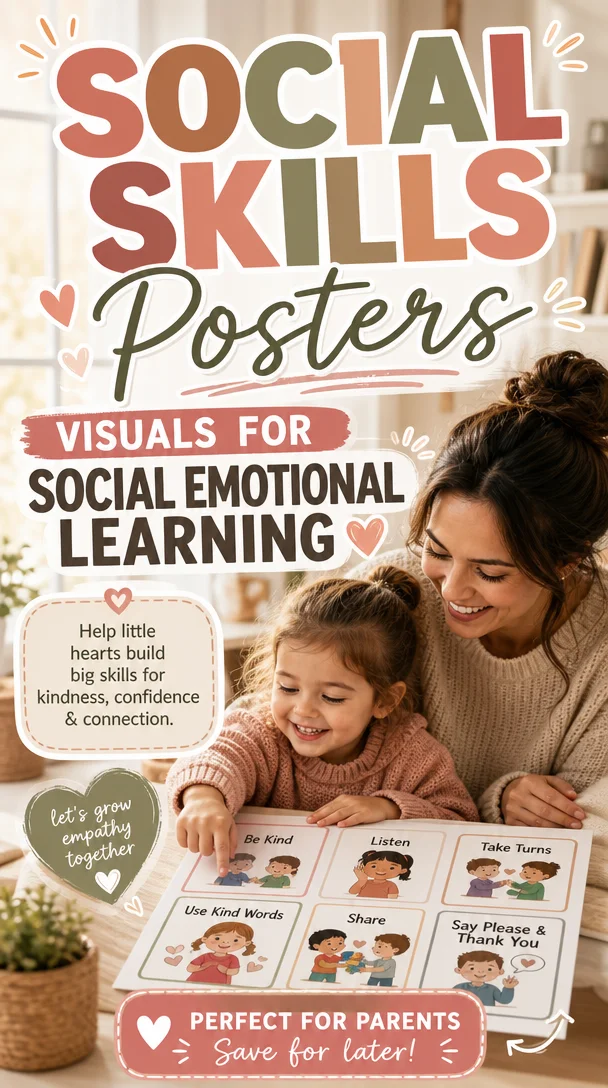
Social Skills Posters – Visuals for Social Emotional Learning
Social Skills Posters: Visuals for Social Emotional Learning
Meta Description: Discover how social skills posters enhance emotional learning for kids and teens. Engage with practical tips and ideas for your family and classroom.
Introduction
Hey there, fellow parents! 💛 If you’ve ever watched your child struggle to connect with friends or shy away from new situations, you know how crucial social skills are. Just like learning to read or ride a bike, mastering social skills can significantly shape your child’s world. This is where social skills posters come into play, helping kids and teens understand and embrace these vital skills.
Imagine walking into a space filled with vibrant visuals highlighting essential social skills—skills like empathy, following directions, and appreciating differences. These intriguing posters serve not just as decoration but as powerful tools for social emotional learning (SEL). By integrating these visuals into your home or classroom, you can guide your little ones toward becoming compassionate, confident individuals who thrive in their interactions with others. So, let’s dive into the world of social skills posters and explore how they can impact our children’s emotional journeys!
Why Are Social Skills Important?
Before we jump into how to use social skills posters, let’s take a closer look at why these skills matter.
Building Connections
Social skills allow children to build relationships. They learn to communicate, share, and collaborate with peers. Imagine a scenario where your child confidently approaches a new friend during recess, initiating a conversation. That spark of connection fuels their happiness and social confidence!
Enhancing Self-Regulation
Kids who have strong social skills often display self-control. They can pause, reflect, and respond calmly in challenging situations, from sharing toys with a sibling to handling disagreements with friends. With guidance, they learn that stepping back can be much more powerful than reacting in the moment.
Embracing Diversity
Teaching children to appreciate differences helps them become empathetic and kind individuals. Social skills posters often include illustrations and quotes that highlight diversity, fostering a sense of belonging and acceptance in your child’s environment.
Real-Life Scenarios
Let’s consider a real-world example: during playtime, your child might feel challenged by a peer who wants to play a different game. With the support of social skills visuals, they might remember to express their feelings and suggest a compromise. Suddenly, a potentially difficult situation transforms into a creative collaboration!
Creative Ways to Use Social Skills Posters
Now that we’ve established why social skills are crucial, let’s explore some practical ways to incorporate these posters into daily life.
H2: Making Visual Connections
-
Home Environment: Hang the posters in high-traffic areas—like the living room or near your child’s play area. Notice how they spark conversations! “Hey, what does this one mean?” could turn into a beautiful learning moment.
-
Playdates: During playdates, introduce a poster as a visual guide. If conflicts arise, gently point to the relevant skill on the poster. For instance, if sharing becomes an issue, highlight the “Be a Good Sport” poster together.
-
Visual Reminders: Turn one poster into a fun challenge. Choose a skill of the week, discuss its meaning, and reflect on instances where your child practiced or needed that skill. Encourage journaling or drawings related to that skill to solidify learning.
H3: Engaging Discussions
-
Mealtime Chats: Use mealtime to dive deeper into the meaning of the skills. Ask open-ended questions: “Can you share a time when you showed empathy?” or “How can we appreciate our friends who are different from us?” These discussions help solidify their understanding and application of social skills.
-
After-School Reflections: When your child returns home from school, engage them with friendly questions related to the posters. “Did you notice anyone using self-control today?” or “What’s a different perspective you saw in group work?” This reflection not only promotes critical thinking but reinforces the skill.
H2: Integrating with Activities
-
Outdoor Play: During outdoor activities, prompt your kids to practice social skills they’ve learned. Create games that involve teamwork or communication, such as building a fort together while ensuring everyone’s ideas are valued.
-
Crafting: Combine art with learning! Ask your child to create their own social skills poster based on what they believe is important. This hands-on activity allows personal expression and reinforces their understanding of the subject matter.
Helpful Tips for Parents
-
Model Behavior: Show your child how to navigate social situations by modeling good social skills yourself. They often learn best through observation, so make sure to practice empathy, respect, and good communication in your interactions.
-
Use Resources: Enhance your collection of social skills posters with books, videos, and games that emphasize SEL. Websites like Pathway2Success offer fantastic resources to explore.
-
Positive Reinforcement: Celebrate small victories! When your child successfully uses a learned skill, applaud their experience. This encouragement not only boosts their confidence but reinforces the behavior.
-
Incorporate Technology: Look for digital versions of social skills posters or apps that promote SEL skills. Interactive tools can engage tech-savvy kids while still hitting the objectives.
-
Be Patient: Remember that learning social skills takes time. If your child struggles with a particular area, reassure them that practice makes progress. Your support is their foundation.
Encouraging Conclusion
Parenting is a beautiful journey marked by countless ups and downs. Embracing the complexity of social skills through tools like posters can significantly light the path for our children. Remember, there’s no need for perfection; what matters most is the love and encouragement you provide along the way.
So, go ahead and create an environment filled with positivity, connection, and learning! Your efforts will ripple through your child’s life, helping them become not just better communicators but also more compassionate human beings. Let’s celebrate those small wins together, one little moment at a time. You’ve got this! ✨
FAQ Section
What age is appropriate for introducing social skills posters?
You can introduce social skills posters as early as preschool, as children begin to engage in social interactions. Tailor the content to match their developmental stage.
How do I choose which social skills to focus on?
Evaluate your child’s current social interactions. Are there frequent issues with sharing, cooperation, or understanding feelings? Tailor your posters to address areas they need more support in.
Can these posters be used in schools as well as at home?
Absolutely! Schools utilize these visuals widely to promote social emotional learning across various age groups. Look for opportunities to collaborate with teachers to enhance the classroom environment.
How can I create my own social skills posters?
Get creative! Collaborate with your child on designing custom posters using drawings, words, or photos that speak to specific skills. This adds a personal touch and deepens their connection to the content.
Remember, you’re not alone in this parenting adventure. Every step you take to nurture your child’s social skills blossoms into brighter futures for them and their friendships. Keep going! 💛