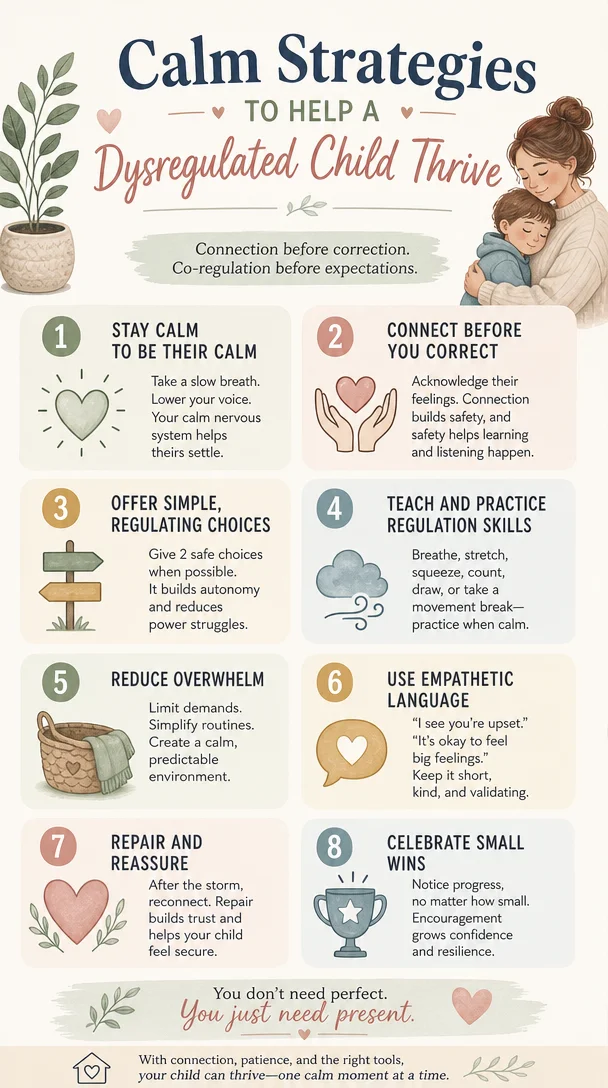
How to Help a Dysregulated Child: 9 Calm Strategies That Work
Meta Description: Discover 9 effective strategies to support a dysregulated child. Practical parenting tips that help create calm moments and emotional connection.
Introduction
Every parent has those days when their little ones seem to be caught in a whirlwind of emotions. One moment, they’re giggling over a game, and the next, they’re overwhelmed by frustration or sadness. If you’ve ever found yourself wondering how to help a dysregulated child, know that you’re not alone. Navigating the ups and downs of toddler emotions can feel like an emotional rollercoaster!
But guess what? It doesn’t have to be overwhelming. By learning a few calm strategies and connecting with your child in those tough moments, you can create a soothing environment that fosters emotional regulation and connection. In this article, I’ll share nine effective approaches to help you support your dysregulated little one.
Let’s take this journey together, sharing our struggles and victories as we learn how to nurture our kids’ emotional well-being.
Understanding Emotional Dysregulation in Kids
Before diving into strategies, let’s take a moment to understand what dysregulation really means. Kids experience big feelings, and sometimes those feelings can spiral out of control. A tantrum, sudden tears, or aggressive behavior often stem from overwhelming emotions, fatigue, hunger, or even the inability to express their needs effectively.
As parents, it’s essential to remember that these moments are not a reflection of failure but an opportunity to guide our children through the chaos. Here are nine calm strategies to help you—and your child—find more balance during these challenging times.
1. Create a Safe Space for Expression
H3: Why This Works
Kids need to feel safe expressing their emotions without fear of judgment. By providing a calm and welcoming environment, you encourage them to share their feelings openly.
H3: How to Do It
Set up a cozy corner in your home with pillows, soft lighting, and a few comforting items like stuffed animals or favorite books. When your child feels overwhelmed, invite them to this space. Use gentle prompts like, “Let’s go to our cozy corner and talk,” to help them transition to a safe space.
2. Practice Deep Breathing Together
H3: Why This Works
Deep breathing helps kids calm their nervous system and regain control over their emotions. It’s a technique they can use throughout their lives.
H3: How to Do It
Turn deep breathing into a fun game! Try the “bubble breathing” method: Pretend to blow bubbles as you inhale deeply and exhale slowly. You can say, “Inhale the smell of yummy cookies, and then let’s blow big bubbles!” This creates a playful moment, easing tension and promoting calmness.
3. Use Visual Aids for Emotions
H3: Why This Works
Sometimes kids struggle to articulate their feelings. Visual aids help them understand and express their emotions better, offering a sense of validation.
H3: How to Do It
Create an emotion chart filled with faces representing different feelings (happy, sad, angry, etc.). You can even personalize it with your child’s drawings! When they seem upset, gently ask, “Which one are you feeling right now?” This encourages open conversations about their emotions without the pressure.
4. Establish Consistent Routines
H3: Why This Works
Kids thrive on predictability. Having a consistent daily routine helps them know what to expect, reducing anxiety and emotional outbursts.
H3: How to Do It
Map out your daily routine with your child, including mealtimes, playtimes, and quiet times. Use a colorful chart or a digital calendar with visual icons. Share it with them, and refer back to it whenever you sense their emotions rising, saying, “I think we should move to our quiet time now!”
5. Encourage Physical Activity
H3: Why This Works
Physical movement releases pent-up energy and frustrations, leading to emotional relief and calmness.
H3: How to Do It
Incorporate regular physical activities into your daily routine, like family walks, dance parties in the living room, or obstacle courses in the backyard. You can say, “Let’s run like we’re superheroes!” to turn movement into an exciting challenge.
6. Offer Comfort Items
H3: Why This Works
Comfort items can provide a sense of security during dysregulation, helping kids regain their composure.
H3: How to Do It
Encourage your child to choose a beloved stuffed animal, blanket, or fidget toy—something they can hold onto when feelings overwhelm them. You might say, “Would you like to hold Mr. Bear while we talk about what’s wrong?”
7. Use Positive Reinforcements
H3: Why This Works
Acknowledging and celebrating small victories can create a more positive environment and motivate your child to regulate their emotions.
H3: How to Do It
When your child manages to express their feelings or calm down after a challenge, offer praise and encouragement: “I’m so proud of you for telling me how you feel! You did such a great job!” This recognition fuels their self-esteem and willingness to communicate in the future.
8. Implement a Calm Down Routine
H3: Why This Works
A clear routine for calming down empowers children to take ownership of their emotions and navigate difficult moments.
H3: How to Do It
Together, come up with a “Calm Down Plan.” It could include a combination of deep breaths, hugging a stuffed animal, or drawing pictures. Share the routine with them, making it a fun and collaborative plan: “What do you think will help you calm down when you feel mad?”
9. Validate Their Feelings
H3: Why This Works
Simply acknowledging your child’s feelings reinforces that their emotions are valid and helps them to feel understood.
H3: How to Do It
When they express frustration or sadness, say things like, “I see you’re really upset right now. It’s okay to feel that way.” By legitimizing their feelings, you build a strong emotional bond and assist them in moving through their dysregulation.
Helpful Tips to Keep in Mind
- Stay Calm Yourself: Your emotional state directly impacts your child’s feelings. Breathe deeply and maintain composure during challenging moments.
- Be Present: Put away distractions and focus solely on your child when they need you. That special one-on-one time can make all the difference.
- Use Books and Stories: Incorporate storytelling to illustrate emotions. Discuss characters in their favorite stories, asking how they might feel in specific situations.
Conclusion
Helping a dysregulated child doesn’t have to be an uphill battle. With these nine strategies, you can create a nurturing and calm environment where your child feels understood and empowered. Every small step you take contributes to their emotional growth and confidence.
Remember, parenting is a journey filled with ups and downs. You are doing an amazing job, even on the hardest days. Keep celebrating those small wins, and know that every effort makes a difference. Grab your child’s hand, remind them they’re not alone, and walk this path of emotional understanding together. You’ve got this!
Optional FAQ Section
Q: What if my child doesn’t respond to these strategies?
That’s okay! Every child is unique. Try to experiment with different strategies and stay patient as you discover what works best for your child.
Q: How can I model emotional regulation for my child?
Talk freely about your feelings and how you manage them. Use your moments of dysregulation as teaching opportunities, explaining how you calm down and move forward.
Q: Are there resources for further learning?
Absolutely! Consider books on gentle parenting, emotional intelligence, or child development to deepen your understanding and skills.
Save this for later 📌 Practical parenting tips backed by child development research. More at monstie.ink #ParentingTips #GentleParenting #ChildDevelopment #MindfulParenting