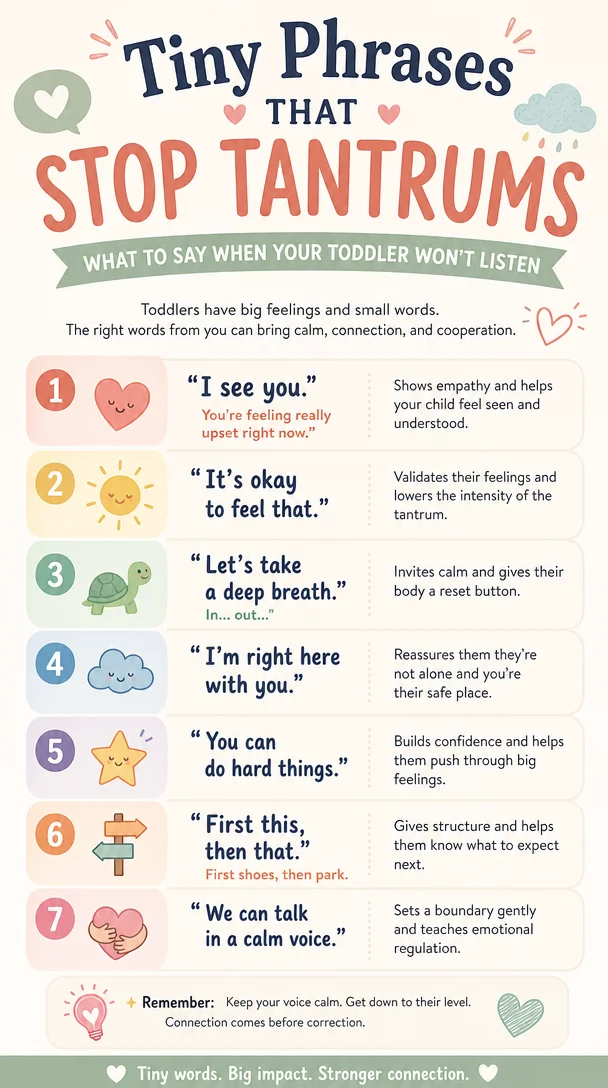
Tiny Phrases That Stop Tantrums: What to Say When Your Toddler Won’t Listen
What to Say When Your Child Won’t Listen: Stop Power Struggles Fast
Meta Description: Discover practical responses and scripts to help your child listen and reduce daily power struggles. Stop the tantrums and embrace peaceful parenting!
Introduction
We’ve all been there. It’s a sunny afternoon, and you’ve asked your little one to put away their toys for the fifth time. Instead of compliance, you get the classic toddler response: a loud “NO!” followed by a full-blown tantrum. Frustration builds as you find yourself caught in a power struggle. You try reasoning, bribing, or simply yelling, but nothing seems to work. In moments like these, it’s easy to feel overwhelmed, alone, and unsure of what to do next.
But here’s the truth: navigating our children’s behaviors doesn’t have to feel like a battle. Every child occasionally tunes out, and the good news is, there are effective ways to handle these situations without losing your cool or self-esteem. In this post, we’ll explore practical phrases to use when your child won’t listen and share strategies that can turn those power struggles into nurturing moments. Let’s dive in and find a bit of peace amidst the chaos!
Understanding the Root of the Issue
Why Won’t They Listen?
Before we jump into the scripts and responses, let’s take a moment to understand what might be happening in your child’s little world. Children often resist listening for several reasons:
-
Developmental Gaps: Toddlers and preschoolers are still developing their listening skills. They may hear you, but they aren’t always ready or able to respond appropriately.
-
Seeking Independence: As children grow, they crave autonomy. Saying “no” feels powerful to them, and they might use it to assert their independence.
-
Overstimulation: Sometimes, too much noise, activity, or chaos can overwhelm your child, making it hard for them to focus on what you’re saying.
-
Just Testing Boundaries: Children naturally test limits as a part of learning. They explore what happens when they push against rules and boundaries.
Recognizing these underlying reasons can shift our perspective and approach, allowing us to respond with more empathy.
Calm and Composed Responses: Your Go-To Scripts
Learning what to say when your child won’t listen can make all the difference. Here are some phrases and scripts that can help de-escalate the situation while making your child feel heard.
Offer Choices
Script: “You can choose to put your toys away now, or we can put them away in five minutes together. What do you want to do?”
By giving your child a sense of control, you empower them to make decisions while still guiding them toward the desired behavior.
Validate Their Feelings
Script: “I see you don’t want to stop playing. It’s hard to leave fun things behind. I understand.”
Sometimes all your child needs is to feel their emotions validated. When they feel heard, they may be more inclined to listen to what comes next.
Use Neutral Language
Script: “It’s time to get dressed. I will count to ten, and then I need you to be ready. Let’s see if we can make it fun!"
Neutral language can reduce pressure and allow your child to engage with you rather than against you. Setting a small, fun challenge adds a playful element.
Reinforce Positive Behavior
Script: “I loved how you put your shoes away when I asked! Thank you for being so helpful!”
Acknowledging their good behavior encourages them to repeat it. Kids thrive on praise, and small wins go a long way in building motivation.
Managing Tantrums: Tips to Create Calm
Create a Comfortable Exit Strategy
When you notice a tantrum brewing, consider having a designated calm-down spot. This could be a cozy corner with pillows and calming toys. You might say, “Let’s go to our calm spot for a minute. We can take deep breaths together!”
Keep a Calm Voice
Your tone matters! Use a calm and soothing voice regardless of the situation. “I see you’re upset. Let’s take a moment to breathe together.” It models emotional regulation and helps signal to your child that it’s okay to feel their feelings.
Introduce Visual Cues
Sometimes words alone aren’t enough. Using charts or visual timers can help communicate transitions. Try visual schedules that show what’s coming next.
Create Routines That Work
Establish Consistent Schedules
Children flourish with routine. When they know what to expect, they feel secure. Try incorporating consistent wake-up, play, and bedtime routines. “After lunch, we will have quiet time, then play outside for a bit.” This predictability can significantly reduce pushback.
Use a Timer for Play
If your child struggles with transitions, try setting a timer for playtime. “We have ten more minutes of blocks, then we’ll start our picture time.” This way, they feel in control of their time while preparing for the next activity.
Fun Activities for Connection
Screen-Free Ideas
Here’s a list of engaging, screen-free activities you can do together:
- Treasure Hunts: Hide items around the house for your child to find.
- Storytime Theater: Act out their favorite stories with different voices or props.
- Art Projects: Create seasonal crafts using simple materials.
Create a Family Board
Designate a space for family fun ideas. Each week, let your child choose an activity to do together, promoting participation and ownership.
Encouraging a Mindful Ending
At the end of the day, remember that parenting is a journey full of ups and downs. You might not get it all right, and that’s perfectly okay. By using these scripts and strategies, you embrace a more peaceful, constructive approach to parenting.
Celebrate the little moments, and remember: you’re doing an amazing job! Building strong connections and understanding your child’s needs can help you navigate even the stormiest moments.
Conclusion
Every time your child doesn’t listen, it presents a unique opportunity to learn and grow together. By choosing to respond with compassion rather than frustration, you can turn “power struggles” into moments of connection.
Stay kind to yourself as you find your rhythm. Remember, small changes can lead to big transformations in your parenting journey. You aren’t alone in these struggles, and with practice, you’ll find what works best for your family.
If you’re ready to take your parenting skills to the next level, don’t forget to check out my Exact Parenting Scripts When Nothing Works guide for ready-to-use phrases that can help reduce daily struggles. Together, we can navigate this beautiful journey of parenting with confidence and joy!
FAQ Section
Q: What should I do if my child keeps throwing tantrums?
A: Consistent responses, validation, and structured routines often help reduce tantrums. Try using the calm-down spot approach or visual cues.
Q: How do I stay calm during a meltdown?
A: Take deep breaths, maintain a calm tone, and remind yourself that this phase will pass. Use your calm energy to help regulate your child’s emotions.
Q: Can I use consequences for bad behavior?
A: Positive discipline focuses on teaching rather than punishing. It’s essential to guide them through their emotions rather than apply strict consequences.
Are you feeling inspired to tackle the next power struggle? Remember, every moment with your child is a chance to connect, learn, and grow together. Share these tips with other parents and let’s make parenting a little lighter, warmer, and infinitely more joyful!