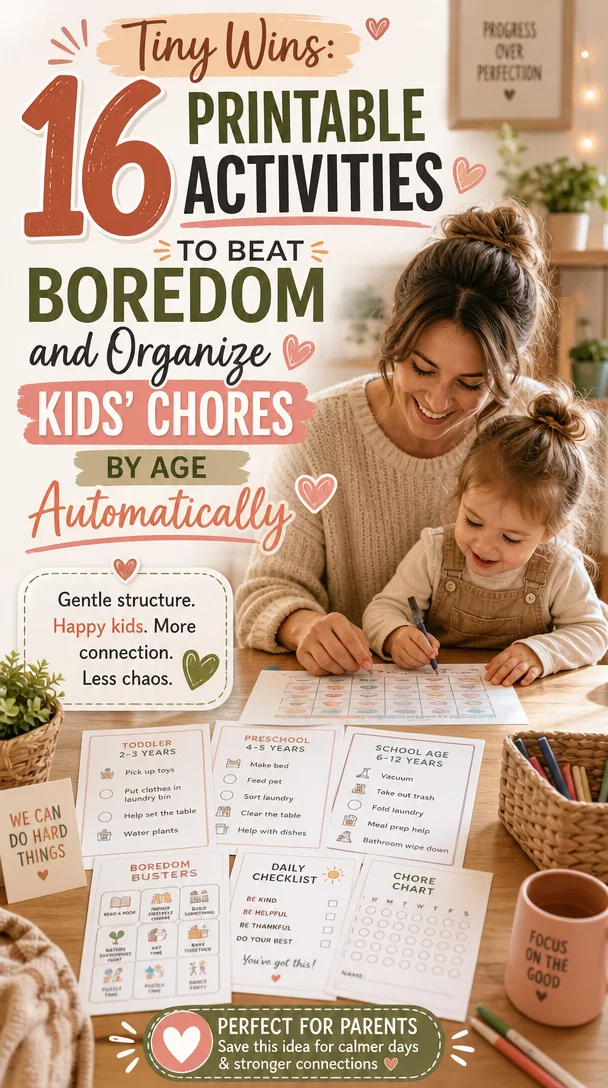
16 Printable Activities for Kids: Boredom Busters + Chore Chart
Meta Description: Discover 16 printable activities for kids, plus age-appropriate chore chart ideas! Keep boredom at bay and teach kids responsibility with our fun, printable resources.
Introduction
Hey there, fellow parents! If you’ve ever found yourself staring at the clock, wondering how it’s only noon and your little ones are already bouncing off the walls, you’re not alone. As we juggle the demands of parenting, finding engaging activities for kids can feel like an endless challenge. You want to keep their minds active while also teaching them responsibility along the way.
That’s why I’ve created this fun list of 16 printable activities for kids that double as boredom busters and incorporate chores into their daily routine. These activities not only keep your kids entertained but also instill a sense of responsibility through age-appropriate chores. Trust me, you’ll find something here that fits perfectly into your family dynamic. Ready? Let’s dive into the world of creative activities and chore charts!
Boredom Busters: Fun Activities for Kids
1. Create Your Own Storybook
Encourage your kids to unleash their inner author by crafting their own storybook. Provide them with blank pages and colorful markers. Prompt them to illustrate their stories, blending creativity with literacy. This activity keeps them engaged and enhances their storytelling skills!
2. DIY Science Experiments
Let’s get those tiny brains buzzing with a few simple science experiments. A classic baking soda and vinegar volcano is a great start. Gather the ingredients and let your kids experience the thrill of watching their creation erupt. Science can be super fun and teaches them about reactions in the world around them!
3. Scavenger Hunt Adventure
Set up a scavenger hunt in your home or backyard. Create a list of items for the kids to find or challenges to complete. You can even theme it around colors, shapes, or nature. Watching them work together and use their problem-solving skills will warm your heart.
4. Art from Nature
Take those nature walks to a whole new level! Collect leaves, rocks, and flowers, then encourage your kids to create art from their findings. They could make leaf rubbings or paint rocks with fun patterns. This bridging of nature and creativity fosters a love for the environment!
5. Build a Fort
Every kid loves a good fort! Hand over some blankets, pillows, and chairs, and let their imagination run wild. This activity is not only fun but helps them develop spatial awareness and teamwork skills.
6. Make Homemade Playdough
With just a few ingredients, you can whip up a batch of homemade playdough. Allow your kids to mix and knead the dough, adding colors as they go. Playdough is a wonderful sensory experience and helps develop fine motor skills. Plus, it’s easy to clean up!
Engaging Kids with Chores: Finding the Right Balance
Teaching our little ones about responsibility through chores doesn’t need to be daunting. With the right approach, it can be an enjoyable part of their day. Below, you’ll find age-appropriate chore lists designed to help you create a chore chart that fits your family.
Chores for Toddlers (Ages 2-4)
At this young age, chores should feel more like fun games than obligations. Here are some simple tasks to include:
- Put away toys: After playtime, guide them to place their toys in designated spots. Make it a game!
- Help with sorting dirty laundry: Ask them to help by selecting colors or matching socks—perfect for those tiny hands.
- Wipe spills: Hand them a damp cloth and let them “help” clean up their messes.
Chores for Preschoolers (Ages 4-5)
As kids grow, they can take on slightly more challenging tasks. Here’s what you can assign:
- Dusting low furniture: Provide them with a microfiber cloth and let them dust reachables—sneaky cleaning!
- Feeding pets: Supervised pet tasks can teach empathy and responsibility.
- Setting the table: Give them small responsibilities like placing utensils or napkins.
Chores for Early Elementary (Ages 6-8)
Kids this age can handle more responsibility. These chores can be enjoyable and slightly more involved:
- Make their bed: Teach them how to make their space feel cozy and organized.
- Help with grocery shopping: Take them along and assign them simple tasks like finding items from the list.
- Water plants: Allow them to care for indoor plants or outdoor gardens—what a fantastic way to connect with nature!
Creating an Easy-to-Follow Chore Chart
Now that you have some chore ideas, it’s time to put them into action with a chore chart! Here’s how to create a flexible, age-appropriate system:
-
Pick a Format: Decide whether you want a digital chart or something colorful on paper. Kids love a visual representation of their work!
-
Involve Your Kids: Let them help design the chart. Ask them about fun stickers or colors to use. Giving them a say will encourage them to take ownership of their chores.
-
Start Small: Introduce one or two new chores at a time. Celebrate these small wins to motivate them to embrace their responsibilities!
-
Use Positive Reinforcement: Offer praise when they complete their chores. Consider using a reward system where points lead to special treats or activities.
-
Review Regularly: Sit down weekly and review their progress together. Adjust the chores as needed, incorporating new responsibilities as they grow.
Printable Activities for Kids: The Fun Continues!
Want to keep the momentum rolling? Here are a few fun printables to grab that will help both keep boredom at bay and encourage responsibility:
7. Coloring Pages
Coloring pages bring out creativity and keep little hands busy. Create your own or download free printable ones featuring their favorite characters.
8. Chore Chart Printable
Design a customizable chore chart that fits your family’s needs. There are plenty of free templates available to start your journey into responsibility.
9. Activity Cards
Create a set of activity cards with various boredom busters written on them. Let your kids pick one during moments of “I’m bored!”
10. Puzzle Printables
Puzzles engage their brains, promote problem solving, and can be a fun solo or family activity for all ages.
Helpful Tips to Enhance Your Parenting Journey
- Set a Routine: Kids thrive on routine. Establish a consistent time for chores and fun activities. This consistency helps them understand expectations and creates a sense of security.
- Make It a Family Affair: Turn chores into family time! Get everyone involved in cleaning or cooking, and make it a fun bonding experience.
- Use Music: Create a playlist of upbeat songs to play during chore time. Music not only makes chores more enjoyable, but it can also help keep the energy high!
Encouraging Conclusion
Parenting can feel like a circus act at times, juggling responsibilities, activities, and everything in between. But remember, you don’t have to get it all perfect. The journey of parenting is about small, meaningful moments that add up to a life filled with love and growth.
By incorporating fun activities and well-structured chores, you create a balanced environment where your kids will thrive—both in play and personal responsibility. You’ve got this; take it one day at a time!
So, grab a snack, gather your family, and explore these fun ideas together. Enjoy every moment, and don’t forget to celebrate those little wins along the way!
FAQ Section
Q: How do I motivate my child to do chores?
A: Start with small tasks they can manage and use praise to encourage them. Making chores a game or involving them in creating their chore chart also helps!
Q: What age should kids start doing chores?
A: Kids as young as two can participate in simple chores. Adjust tasks according to their age, skills, and your family’s routine.
Q: Are printable activities effective?
A: Absolutely! Printables provide structure and inspire creativity. They keep kids engaged and can be easily customized for various interests and skills.
Remember, parenting is hard sometimes, but you’re not alone—and small changes can make a huge difference!