
Choose Connection Over Correction: 7 Gentle Parenting Cues Every Parent Should Notice
Signs Your Child Needs Connection, Not Correction: Gentle Parenting Tips Every Parent Should Know
Meta Description
Discover gentle parenting tips to recognize when your child needs connection over correction. Build stronger bonds and support emotional growth effortlessly.
Introduction
Picture this: it’s a typical afternoon, and suddenly your sweet toddler erupts into an emotional storm over a broken toy or a simple request for snacks. You might feel the urge to correct their behavior, but have you ever paused to wonder what they truly need in that moment? Trust me, you’re absolutely not alone in this scenario. I’ve been there — the chaos, the frustration, and the weariness that comes with navigating these tricky parenting moments. The truth is, sometimes kids don’t need to be corrected; they crave connection.
In this post, we’ll explore the signs that indicate your child is seeking emotional connection rather than correction. I’ll share practical, gentle parenting tips to help you nurture that bond when emotions run high. Let’s dive in and discover how we can support our little ones through their big feelings with empathy, compassion, and connection.
Understanding Emotional Cues: Why Connection Matters
The Heart of Connection
When our children experience emotional turmoil, they often communicate their needs through a variety of cues. Whether it’s clinginess, anxiety, or sudden meltdowns, these outbursts frequently stem from their need for connection. Understanding this is vital because it shifts our approach — from correcting behavior to building a supportive, loving relationship.
The Emotional Rollercoaster
Children experience emotions far more intensely than adults. Imagine feeling overwhelmed but not having the vocabulary to express it. Instead, they react. They might throw an unexpected tantrum, cling to you extra tight, or display anxiety in new situations. Each response reflects a deeper need for connection, understanding, and validation.
Example: Consider a child who cries and throws a toy in frustration. Instead of seeing this as misbehavior, recognize it as a signal of their emotional distress. They may be feeling misunderstood or overwhelmed, and your connection can ground them.
Common Signs Your Child Needs Connection
1. Clinginess and Neediness
One of the clearest indicators that your child craves connection is when they become unusually clingy or seek constant reassurance. This can manifest in them staying close to you, wanting to be held, or following you around the house.
Tip: Try setting aside dedicated bonding time each day, even if it’s just a short period where you unplug and engage in a favorite activity together. This simple act can help reassure them that they are seen and cherished.
2. Emotional Outbursts
If your child suddenly bursts into tears or has a tantrum seemingly out of the blue, they might be feeling overwhelmed. These emotional outbursts can indicate a need for your presence, comfort, and understanding.
How to Respond
Rather than correcting their behavior right away, try to comfort them first. Get down to their level and say, “I can see you’re really upset right now. I’m here for you.” Your acknowledgment of their feelings can provide immense relief and connection.
3. Difficulty Calming Down
Another sign is when your child struggles to calm down after an emotional experience. They may continue to cry or act out even after the situation has resolved. This indicates that their emotional world needs your soothing presence rather than a disciplinary approach.
Comforting Strategy: Encourage deep breathing together. Lead by example, taking slow, deep breaths. Kids often mirror our actions, so this can help them find their calm.
4. Increased Anxiety
When children face new social situations or changes in their routine, they may express anxiety through fussiness or withdrawal. This typically signals a desire for reassurance and connection with a trusted adult.
Connection Activity: Creating a visual schedule can help ease anxiety about transitions. It shows them what to expect, making it easier for them to feel secure.
5. Regression in Behavior
Children sometimes regress to younger behaviors when feeling overwhelmed. You might notice your child reverting back to using a pacifier or wetting the bed again. This often highlights their need for comfort and connection during stressful times.
Nurturing Response: Offer gentle reassurance and remind them they are safe and loved. Share stories about when you felt similar emotions, allowing them to see they’re not alone in their feelings.
Gentle Parenting Tips for Building Connection
1. Establish a Routine
Creating a consistent daily routine can provide your child with a sense of security. Knowing what to expect makes it easier for them to feel grounded.
- Tip: Incorporate connection time into your routines. For example, set aside dedicated moments in the morning for cuddles or evening storytime to foster that bond.
2. Be an Active Listener
Listening to your child’s thoughts and feelings is crucial for building a strong emotional connection. Reflect back what they say and validate their feelings.
- Example: If your child shares something about their day, acknowledge it: “That sounds tough. I understand why you felt upset.” This simple validation fosters trust and connection.
3. Practice Mindful Parenting
Mindfulness practices can help you be fully present with your child. When chaos ensues, taking a deep breath can allow you to respond with empathy instead of frustration.
- Actionable Tip: Create a crisis mantra you can repeat in your head, such as “Connection over correction.” This mental shift can help you focus on your child’s needs rather than their behavior.
4. Use Empathy and Validation
When your child expresses strong emotions, acknowledge their feelings instead of dismissing them. This fosters a secure connection and shows them their emotions are valid.
- Example: If they feel scared during a thunderstorm, say, “It’s okay to be scared. Thunder can be really loud and surprising. I’m here with you.”
5. Create Quality Moments Together
Design moments that foster connection and joy. This could mean engaging in a shared hobby, reading together at bedtime, or building a fort in the living room.
- Tip: Unplug from devices during these times so you can fully engage and enjoy the moments without distractions.
Encouraging a Supportive Environment
1. Create a Safe Space for Emotions
Encourage your child to express their emotions openly and let them know it’s okay to feel however they feel.
Routine Example: Establish a “feelings corner” in your home with pillows, soft lighting, and art supplies. This can serve as their safe place to express emotions through drawing or simply resting.
2. Model Emotional Regulation
Show your children how you handle your own emotions. Talk them through your process when you feel overwhelmed, demonstrating vulnerability and teaching them by example.
Real Life Example: If you feel stressed, say, “I need to take a moment to breathe. Let’s take a few deep breaths together.” Modeling this behavior teaches them valuable coping skills.
3. Engage in Connection Activities
Plan activities that allow for connection. Think about things you can do together that invite conversation and bonding, such as cooking, crafts, or nature walks.
4. Use Positive Reinforcement
Instead of focusing only on correcting negative behavior, highlight and celebrate moments of connection. When your child shows kindness or shares their feelings, commend them for it!
- Example: “I loved how you shared your toys today! That was very kind, and it made me happy!” This encourages them to continue opening up and connecting.
5. Check-in Regularly
Make it a habit to ask your child about their feelings consistently, not just when frustration arises. Regular check-ins foster openness and keep the lines of communication clear.
- Conversation Starter: At the end of each day, ask them, “What was the best part of your day? And was there anything that made you feel sad or upset?” This invites sharing and emphasizes connection.
Conclusion
Navigating the ups and downs of parenting can feel overwhelming, but remember — it’s alright to take a step back and connect with your child instead of rushing to correct their behavior. By recognizing the signs that indicate a need for connection, you can cultivate a nurturing environment rich in empathy and understanding.
Every step you take toward connecting with your little one builds a stronger bond grounded in love. So when those challenging moments arise, trust in the power of connection. You’re not alone on this parenting journey, and your efforts truly make a difference. Let’s embrace these small moments of connection, one little hug, smile, and understanding glance at a time.
FAQs
Q: How can I tell if my child is having a difficult day?
A: Look for signs like irritability, clinginess, or sudden emotional outbursts. These usually indicate a need for connection.
Q: What if I can’t always be there for my child?
A: It’s okay! Communicate your love and reassurance verbally, and find little moments each day to connect, even if briefly.
Q: How can I build a better routine around emotional connection?
A: Incorporate designated “connection times” in your daily schedule to ensure you consistently engage with your child over meaningful activities.
Q: What if my child refuses to talk about their feelings?
A: Encourage expression through play or creative outlets. Sometimes drawing their feelings or engaging in a fun activity can prompt them to share more.
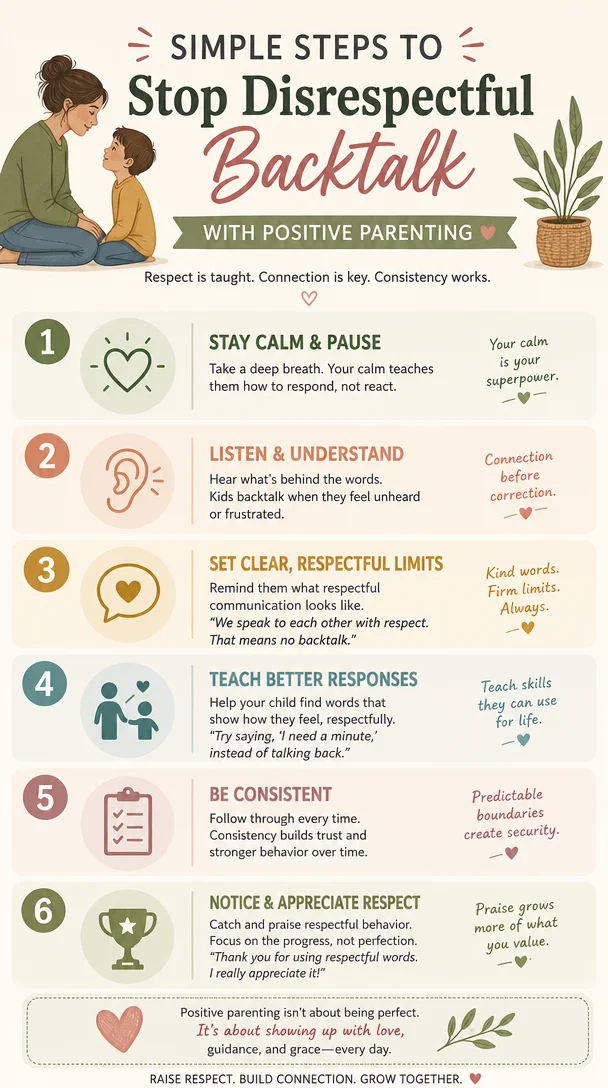
Simple Steps to Stop Disrespectful Backtalk With Positive Parenting
6 Steps to Handle Disrespect and Backtalk Using Positive Parenting
Meta Description: Struggling with disrespectful behavior from your kids? Discover 6 powerful steps to address backtalk with positive parenting strategies that encourage growth.
Introduction
Ah, the infamous backtalk! When your sweet little one suddenly decides to unleash their inner sassy pants, it can feel like a scene straight out of a reality show. One moment, you’re enjoying a peaceful afternoon snack, and the next, you’re wading through a sea of attitude as they boldly challenge your every word. Sound familiar?
Dealing with disrespect can leave any parent feeling frustrated, helpless, and unsure of how to respond. Yet, here’s the good news: you’re not alone in this parenting journey, and there are ways to shed light on this tricky behavior! Let’s explore six steps to handle disrespect and backtalk using positive parenting techniques that create space for learning, understanding, and growth—a gentle reminder that parenting doesn’t have to be about perfection, but about connection.
Understanding the Roots of Disrespectful Behavior
First, it’s essential to recognize that backtalk often stems from a child’s need to express themselves and test boundaries. Kids don’t always have the vocabulary or experience to communicate their feelings appropriately. Sometimes frustration bubbles up, and they lash out, not because they want to hurt you, but because they are still figuring out the world around them.
H2: Step 1: Stay Calm and Take a Breath
When your child throws a verbal curveball your way, it’s easy to react instinctively out of frustration. Yet, taking a moment to breathe can change the entire dynamic of the situation. Instead of getting wrapped up in emotion, and allowing anger to dictate your response, pause for a second. Count to three, inhale deeply, and exhale slowly.
This moment of calm clears your mind and creates space for a thoughtful response. Remember, modeling emotional regulation teaches your child valuable lessons on handling feelings.
H2: Step 2: Acknowledge Their Feelings
Instead of dismissing your child’s attitude, take a moment to acknowledge their feelings without judgment. Say something like, “I can see you’re feeling pretty upset. It’s okay to feel that way.” By validating their emotions, you’re showing empathy and letting them know it’s okay to express themselves—even if the words aren’t coming out in the best way.
You create an opening for them to share what’s bothering them. This approach builds connection and understanding, which is vital for their emotional development.
H3: Practice Empathetic Responses
After acknowledging their feelings, you can say something like, “I understand that you’re frustrated because you want to watch just one more video before dinner. It can be really hard to stop when you’re having fun!” This kind of response makes it easier for them to feel understood, reducing the chance of further backtalk.
Step 3: Set Clear Expectations
It’s essential to ensure your child knows the boundaries surrounding respectful communication. Take the time to explain what you expect in terms of their language and behavior. It’s not just about telling them what not to do; it’s also about illustrating the positive way to communicate.
H2: How to Set the Stage
-
Use Role-Playing: Engage your child in role-playing different scenarios. You can act out certain situations where they can practice responding respectfully. This hands-on approach fosters understanding.
-
Consistent Reminders: Reinforce the expectations gently but firmly. Remind them before situations that might trigger backtalk—like group settings or family meals.
Step 4: Use Natural Consequences
When possible, let natural consequences take the lead. If a child chooses to talk back or disregard your request, allow the result of their choices to unfold (while ensuring their safety). If they don’t finish lunch because they’ve been disrespectful and refuse to eat, remind them calmly that they may feel hungry later on.
Consequences teach lessons without your having to ‘punish’ them. They’ll come to realize the importance of kindness and respect as they navigate these moments.
H3: Example Scenario
Imagine your child repeatedly interrupts during a family conversation. Instead of raising your voice, calmly say, “I can see you have something to share, but interrupting isn’t helpful. If you want to share your thought, let’s wait for your turn.” This way, they learn the importance of patience and listening.
Step 5: Reinforce Respectful Communication
Celebrate small wins! When your child expresses themselves respectfully or handles their emotions better, praise them for their efforts. Use phrases like, “I loved how you expressed your feelings without yelling. That was really mature!”
Positive reinforcement helps solidify respectful behaviors over time. Kids experience a joy in knowing that they made the right choice, encouraging them to keep it up.
H2: A Quick Tip
Create a family praise jar. Each time your child does something commendable—like resolving a conflict with respect—drop a note in the jar. At the end of the month, take time as a family to read them together and celebrate those moments!
Step 6: Model Respectful Behavior
Kids learn by observing, so showing respect in your daily interactions—including with them—is crucial. Make a habit of speaking with kindness and consideration, even during challenging moments.
H3: Everyday Examples
-
Use “Please” and “Thank You”: Using polite language teaches them the art of respect and gratitude.
-
Listen Actively: When they talk, make eye contact and show that you value their words. Respond back thoughtfully, even if it’s silly kid talk.
Conclusion
Handling backtalk isn’t just about correcting behavior; it’s about instilling strong communication skills and emotional intelligence within our children. By utilizing these six steps—remaining calm, acknowledging feelings, setting clear expectations, allowing natural consequences, reinforcing respectful communication, and modeling respect—you set the tone for how your family interacts.
Parenting is undeniably a mix of beautiful, messy moments, and at times, it can feel overwhelming. But remember, every small step counts, and these challenges today help shape kind, confident kids for tomorrow. The next time you face a moment of backtalk, take a deep breath, implement one of these strategies, and remind yourself that you’re doing an amazing job. You’ve got this!
Optional FAQ Section
Q1: What if the backtalk continues despite following these steps?
A: If disrespect persists, consider talking with them about why they feel compelled to respond that way. Sometimes underlying issues need to be addressed.
Q2: How can I incorporate these strategies into everyday interactions?
A: Integrate small reminders during daily routines—like during meal times or play—to practice open communication and respectful behavior.
Q3: Can screen time cause more backtalk?
A: Yes, excessive screen time can overstimulate and lead to frustration. Establishing boundaries around screen time and promoting healthy play can contribute to calmer interactions.
When it comes to parenting, remember that every day presents new opportunities to teach and learn. You have the strength and wisdom to guide your children with kindness, love, and patience. Keep shining, fellow parent!

What No One Tells Parents About Confusion and Instability in Kids
How Parents Accidentally Cause Confusion and Instability for Kids (And How to Fix It)
Meta Description
Discover common parenting mistakes that confuse kids and create instability at home. Learn simple strategies to help build a smoother, more supportive family life.
Introduction
As parents, we navigate a delicate balance of love, discipline, and an endless to-do list. Sometimes, in the hustle and bustle of daily life, we might unintentionally confuse our little ones or create an environment that feels unstable. Yet, these moments don’t have to define our parenting journey. With a little awareness and some actionable steps, we can turn things around, making life a little clearer and a lot more joyful for our kids.
Let’s face it: parenting isn’t exactly a walk in the park. It’s more like a toddler-led marathon where the finish line keeps moving! But don’t worry — many parents make similar accidental mistakes. With empathy and encouragement, we can unpack how these missteps occur and, more importantly, how we can fix them.
Let’s dive into some common accidental parenting mistakes and explore ways to bring stability and clarity back into our homes.
Why Confusion Occurs and How It Affects Kids
Children thrive on routine and clear communication. When parents unintentionally create instability, whether through mixed messages or erratic schedules, kids can become confused, anxious, or even resistant.
The Impact of Mixed Messages
One of the biggest culprits of confusion is mixed messages. Imagine telling your toddler, “No snacks before dinner” one day and then allowing treats the next just because you’re tired. This inconsistency can leave your child feeling anxious and questioning which rules really matter.
Fix: Consistent Boundaries
To build a stable environment, parents need to set clear, consistent boundaries. Choose three main rules you want to enforce at home (like “no screens during dinner”). Stick to these rules as much as possible, but remain open to discussion. For example, if you need to change a rule temporarily because of a family event, explain it to your child. “Tonight, we’re having a party, and we can have dessert first! But tomorrow, we go back to no snacks before dinner.” This allows your child to understand that changes are exceptional, not the norm.
Routines Matter: Why Consistency Creates Comfort
Routines offer kids a sense of security. Changes in the routine can often create confusion and frustration.
Examples of an Effective Daily Routine
Here’s a simple daily routine that can make your mornings smoother and reduce chaos:
- 7:00 AM – Wake Up, Stretch, and Get Dressed
- 7:30 AM – Family Breakfast
- 8:00 AM – Brush Teeth and Gather School Stuff
- 8:30 AM – Outdoor Play before School
- 9:00 AM – Off to School
By sticking to this routine, your kids know what to expect, which makes mornings less stressful for everyone.
Fix: Establish a Visual Schedule
Create a visual schedule using pictures that represent each activity in your routine. Hang this on the wall where your kids can see it. This not only allows them to know what comes next but can also help them feel empowered as they check off each task.
The Importance of Emotionally Available Parenting
Emotional availability is crucial for nurturing a child’s mental health. When parents get caught up in their plans, they may inadvertently neglect their child’s emotional needs.
Real-Life Scenario
Consider a busy evening filled with chores, dinner prep, and phone calls. If your child approaches you with something they want to share, but you’re distracted and brush them off, they might feel ignored or invalidated. This can lead to feelings of instability in their relationship with you.
Fix: Create Dedicated Connection Time
Set aside “connection time” at least once a day. This could be during your evening routine or even after school. Ask open-ended questions that encourage conversation. For example, “What was the best part of your day?” This simple act of dedicating time shows your child that their thoughts and feelings are important to you!
Praise and Criticism: The Balance is Key
While it’s essential to celebrate accomplishments, it’s equally vital to provide constructive feedback instead of criticism.
Common Parenting Mistake: Overpraising
Overpraising by labeling behaviors as “always wonderful” can backfire. Kids might think they must be perfect to earn love, which can lead to anxiety.
Fix: Celebrate in Balance
Instead of saying, "You’re the best at art!" try something like, “I love the way you mixed those colors in your painting. You really made it unique!” This teaches children to value effort and creativity, not just achievement.
The Power of Positive Discipline
Using positive discipline techniques helps children learn from mistakes without causing feelings of instability. When discipline leads to understanding rather than punishment, kids can learn to better manage their behavior.
Practical Positive Discipline Tip
When a child misbehaves, rather than immediately resorting to a timeout, try asking, “What do you think you could have done differently?” This approach encourages accountability and gives them the tools to behave better next time.
Communication is a Two-Way Street
Communication is vital in a family. When parents assume they know what their kids are thinking or feeling, it can sow seeds of confusion.
Effective Strategies for Open Communication
- Use “I” Statements: Instead of saying, “You never listen,” try “I feel overwhelmed when I repeat myself.”
- Ask for Their Perspective: Invite your kids to share their thoughts by asking questions like, “What do you think about this rule?” This validates their feelings and shows them that their opinions matter.
Nurturing Emotional Development
Encouraging emotional intelligence in children sets them up for long-term success. Parents can accidentally hinder this development by dismissing feelings or not allowing children to express themselves.
Fix: Normalize Feelings
When kids express emotions, acknowledge them. If your child feels sad about a friend moving away, you could say, “It’s okay to feel sad. I feel sad when my friends leave, too.”
Activities to Foster Emotional Skills
- Feelings Charades: Have family members act out different feelings and have others guess what they are.
- Emotion Journals: Encourage kids to draw or write about their feelings, helping them identify and express emotions constructively.
Encouraging Independence While Providing Stability
Parents often feel stuck between wanting to nurture their child’s independence and ensuring they are stable and secure. Striking that balance can be a challenge.
Encouragement without Chaos
Allowing kids to do things independently – like dressing themselves or making simple meals – helps build self-confidence. But without guidance, they can feel overwhelmed.
Fix: Gradual Independence
Offer “jobs” that are manageable. For instance, if a child wants to make their lunch, start by showing them how to assemble a simple sandwich. Over time, encourage them to take on more responsibility. This way, kids build their independence while still relying on the stability you provide.
Family Bonding Through Shared Experiences
Amid the hustle of life, it’s vital to prioritize family bonding. Family activities can become chaotic when parents don’t set realistic expectations for fun.
Practical Ways to Bond and Create Stability
- Weekly Game Night: Choose one night a week to play board games—this fosters connection without the need for elaborate planning.
- Nature Walks: Go for a walk in your neighborhood or a nearby park. This informal setting encourages relaxed conversations.
Encouraging Self-Care for Parents
Finally, let’s not forget about self-care for you as a parent. Taking care of yourself ultimately leads to a more stable environment for your kids.
Self-Care Ideas
- Take a Daily Break: Dedicate 15 minutes to yourself daily, whether it’s sipping coffee in silence or enjoying a quick stroll outside.
- Connect with Other Parents: Join a parenting group or find friends to share experiences and support.
Conclusion
Parenting can be a beautiful chaos. But when we acknowledge our unintentional missteps, we empower ourselves to create a stable and nurturing environment for our children. Remember, it’s the consistent, small changes that foster significant impact.
As you explore this journey, know you are not alone — many parents face similar challenges. Celebrate your progress, and be gentle with yourself. Every moment you choose to connect, communicate, and create stability brightens your family life.
Now grab that warm coffee, take a deep breath, and embrace the little moments — all those tiny victories add up. Together, we can navigate the complexities of parenting, making those "messy" moments a bit more manageable and filled with love.
FAQ Section
1. How do I know if I’m confusing my child?
Look for signs of frustration or anxiety. If your child seems unsure of what’s expected, you may need to clarify your messages.
2. What practical steps can I take to improve communication?
Use open-ended questions, validate their feelings, and actively listen without interruptions. This fosters a more open dialogue.
3. How can I create a routine that works for my family?
Start small by implementing a few core elements and gradually expand as your family adjusts. Gather everyone’s input to make the routine feel collaborative and enjoyable.
4. What if I change my mind about a rule?
It’s okay to change rules occasionally, but communicate why to your kids. This helps them understand that rules can be flexible when necessary.
5. How important is self-care for parents?
Self-care is vital for your well-being and ability to parent effectively. By taking care of yourself, you enhance your ability to provide a stable, nurturing environment for your children.
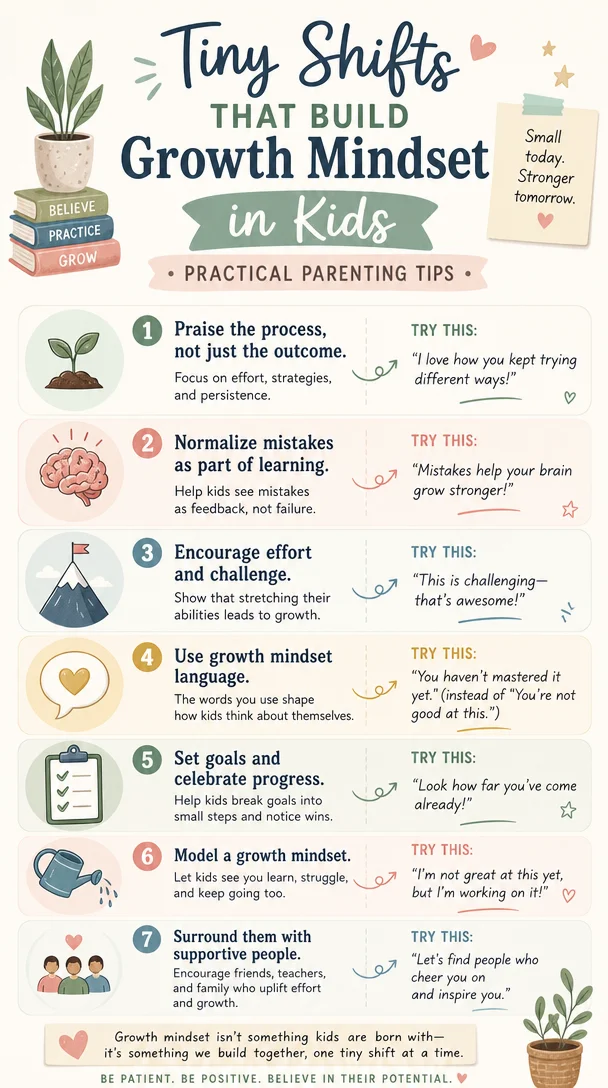
Tiny Shifts That Build Growth Mindset in Kids: Practical Parenting Tips
Parenting with a Growth Mindset: Gentle Tips for Raising Resilient Kids
Meta Description: Discover growth mindset parenting tips to raise happy, resilient kids. Transform parenting worries into confidence with these gentle, actionable strategies.
Introduction
As parents, we all want our children to thrive, don’t we? We dream of watching them grow into happy, resilient adults who can tackle challenges with confidence. But sometimes, it feels like we’re caught in the whirlwind of everyday parenting struggles, unsure of how to empower our little ones. If you’ve ever found yourself worrying that your child might adopt a “poor me” attitude or feel overwhelmed by setbacks, you’re not alone.
Imagine this: your child faces a challenging task, perhaps trying to tie their shoes for the first time. Instead of feeling defeated and ready to give up, they take a deep breath, gather their thoughts, and try again. Yes! That’s the essence of a growth mindset. This mindset doesn’t come naturally to everyone, but you can help nurture it. With a few gentle tweaks in how we respond to our children’s challenges, we can lead them toward resilience and happiness.
In this blog post, we’ll explore five simple changes you can make today to encourage a growth mindset in your kids. Let’s dive in and discover how we can empower our kids to embrace challenges and grow through their experiences!
Understanding the Growth Mindset
What is a Growth Mindset?
A growth mindset is the belief that abilities and intelligence can be developed through dedication and hard work. This understanding fosters a love for learning and resilience, making children more willing to take on challenges.
On the other hand, kids with a fixed mindset often feel trapped by their perceived limitations. They might think, “I can’t do this” or “I’m just not good at that.” By shifting our parenting approaches, we can guide our children toward a more adaptive mindset.
Why is it Important?
Raising children with a growth mindset can provide them with tools to navigate life’s ups and downs, from school assignments to friendship struggles. Children who embrace this mindset tend to bounce back from failures, demonstrate a greater passion for learning, and develop stronger emotional resilience.
Five Gentle Parenting Changes to Foster a Growth Mindset
Ready to make a difference? Here are five effective yet gentle changes you can incorporate into your parenting style that will help sow the seeds of a growth mindset in your little ones.
1. Shift the Focus from Failure to Learning
When our kids face obstacles, they often hear us react to failures or mistakes. Instead of asking, “What went wrong?” try reframing your conversations to emphasize learning.
Example: If your child didn’t score well on a quiz, say something like, “What did you learn from that quiz? Were there any questions that surprised you? Let’s revisit them together!”
Focusing on learning rather than simply the outcome conveys that it’s okay to stumble on the path to success. Remind them that mistakes are just stepping stones toward greater understanding.
2. Celebrate Efforts, Not Just Achievements
As parents, we become so proud the moment we witness our children achieving something great. Yet, it’s just as crucial to recognize the process they went through to get there. Celebrating effort instills a growth-oriented mindset.
Practical Tip: Create a family “effort chart” where you can jot down instances of persistence. Big or small, every effort counts! Whether your child tried a new sport or practiced reading aloud—all those attempts deserve recognition.
Every time you highlight their effort, you strengthen their belief that perseverance leads to success.
3. Model a Growth Mindset in Your Own Life
Children learn by observing us. When they see us challenge ourselves and embrace new experiences, they are more likely to do the same.
Example Conversation: Share your own struggles. If you’re learning to cook a new recipe, talk about the mistakes you’ve made and how you learned from them. You might say, “I burned dinner last night, but I figured out what went wrong. Next time, I’ll set a timer!”
By exposing them to your learning process, you grant permission for them to be a work in progress too.
4. Encourage Problem-Solving
When your child encounters a roadblock, resist the urge to swoop in and solve it for them. Instead, prompt them to brainstorm solutions. This practice not only boosts their problem-solving skills but also cultivates independence.
Helpful Technique: Use open-ended questions that guide them without giving away the answer. For example, ask, “What are some ways you think you could tackle this challenge? Have you tried anything different?”
Encouraging self-reflection provides them with a sense of agency and empowers them to find their own answers.
5. Foster Mindfulness and Self-Compassion
Teaching mindfulness helps children develop awareness of their thoughts and feelings, which plays a crucial role in fostering resilience. Mindfulness practices, such as deep breathing and meditation, can help your child stay centered when faced with challenges.
Quick Activity: Try a simple breathing exercise with your child. Sit together, close your eyes, and take ten deep breaths while counting together. This calm-down moment can build emotional awareness.
Coupling this with self-compassion means teaching them to be kind to themselves during tough situations. Remind them, “It’s okay to feel overwhelmed sometimes. What matters is how we choose to respond!”
Bringing It All Together: Actionable Tips
There you have it! Five gentle yet impactful strategies to help your children cultivate a growth mindset. Here’s a quick summary of actionable tips:
- Focus on Learning: Encourage conversations about what they learned from mistakes.
- Celebrate Efforts: Create an “effort chart” to track persistence and effort, not just results.
- Model Growth: Share your own challenges and learning experiences openly.
- Encourage Problem-Solving: Ask guiding questions to foster independence and critical thinking.
- Practice Mindfulness & Self-Compassion: Incorporate mindfulness exercises and encourage self-kindness when facing challenges.
Encouraging Conclusion
Navigating the beautiful chaos of parenting isn’t always easy, but you have the power to enrich your child’s life with these simple yet profound changes. Remember, cultivating a growth mindset in our children doesn’t happen overnight; it takes patience, empathy, and a sprinkle of persistence.
As you embark on this journey, remind yourself that small efforts will create lasting impacts. You’re paving the way for your children to embrace challenges, learn from setbacks, and ultimately grow into the resilient, happy adults you imagine.
So lean into these gentle parenting practices, and know that every little moment spent nurturing a growth mindset is a moment well invested. You’ve got this, and you’re not alone in this adventure. Here’s to raising a new generation of confident, resilient kids—one mindful moment at a time!
FAQ Section
Q: What is a growth mindset?
A: A growth mindset is the belief that abilities and intelligence can be developed through learning and effort.
Q: How can I encourage my child to have a growth mindset?
A: Use the strategies above—focus on learning from failures, celebrate efforts, model growth, encourage problem-solving, and foster mindfulness.
Q: Is it possible to change a child’s fixed mindset into a growth mindset?
A: Yes! By making small, consistent changes in how you respond to their challenges, you can help them develop a more resilient and adaptive mindset.
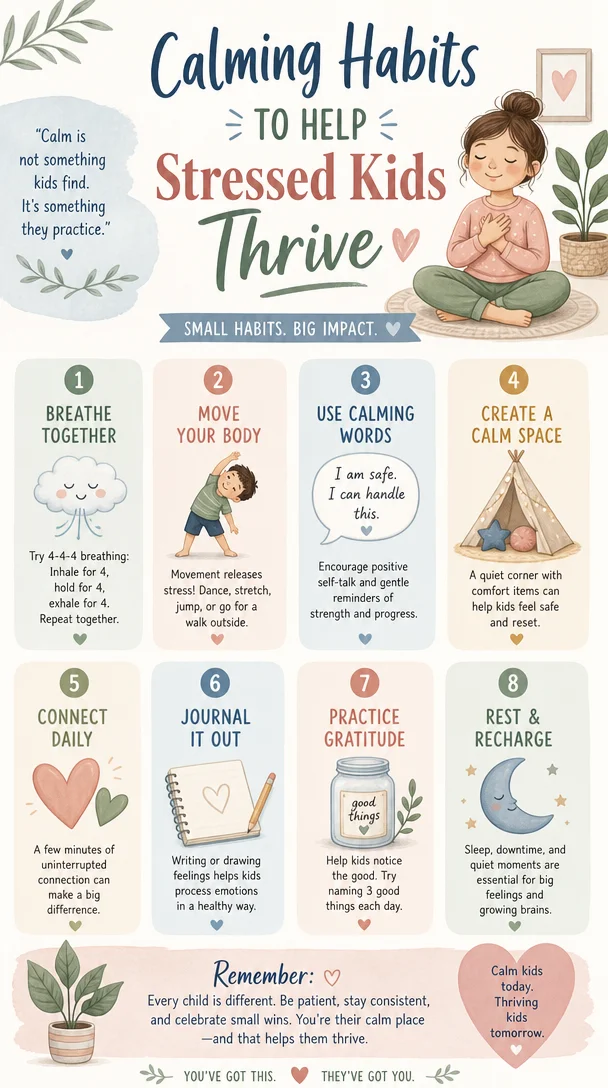
Calming Habits to Help Stressed Kids Thrive
How to Help Stressed Kids: 5 Simple Changes to Reduce Anxiety
Meta Description
Discover five easy parenting changes to help reduce stress in kids. Create a calmer, happier home with practical tips for a more balanced family life.
Introduction
As parents, we all face that uneasy feeling when we see our kids stressed out or anxious. You know the one—when your little one suddenly acts withdrawn, their forehead creased with worry, or perhaps they’ve thrown a tantrum seemingly out of nowhere. It’s heart-wrenching, isn’t it? But here’s the good news: you hold the power to help ease their stress. Small adjustments in your daily routine can create a calmer, happier environment for your family.
In this post, I’ll walk you through five common ways that parents unintentionally contribute to their kids’ stress. These tips are straightforward and easy to implement, making a world of difference for your little ones. Let’s dive in and create a nurturing space where your children feel safe and secure.
1. Simplify the Schedule: Less is More
Recognizing Overwhelm
Have you ever noticed your child becoming anxious before a packed day? Between school, extracurricular activities, and social commitments, children can feel overwhelmed by their schedules. Just like adults, kids need downtime to recharge. It’s crucial to recognize the signs of overwhelm—fidgeting, irritability, or clinginess can all indicate that your child needs a break.
Actionable Steps
- Weekly Planning Sessions: At the beginning of the week, sit down with your child and map out their schedule. Take a good look at what activities really excite them and which ones might be causing unnecessary stress.
- Prioritize Free Play: Allow at least a couple of unscheduled afternoons where your kids can simply relax, play, and explore their interests. Free play reduces stress while fostering creativity.
Tip: Keep your family calendar visible and updated. This way, kids can anticipate what’s coming up and feel more in control of their week.
2. Communicate Clearly: Foster an Open Dialogue
The Power of Words
Chances are, you’ve encountered situations where unclear communication led to confusion. Children thrive when they understand what’s happening around them. They need clarity to feel safe. If you notice your child becoming anxious, it might stem from a lack of communication or unpredictability in family routines.
Actionable Steps
- Daily Check-Ins: Establish a routine where you ask your child how they feel each day. Use prompts like, “What was the best part of your day?” or “How did you feel when…?” This opens the door for deeper conversations and builds trust.
- Visual Cues: For younger kids, consider using visual schedules. Pictures representing daily activities can provide reassuring structure and clarity.
Tip: Remind your kids that it’s completely normal to feel a range of emotions. Encourage them to express their feelings without fear of judgment.
3. Limit Screen Time: Encourage Real-World Connections
Understanding Screen Stress
In today’s digital age, it’s easy for screen time to exceed our intentions. Though technology offers educational content, excessive exposure can also lead to anxiety, sleep issues, and emotional distress in kids. Limiting screens can foster more authentic connections and reduce stress.
Actionable Steps
- Create Tech-Free Zones: Designate certain areas of your home, like the dining room or bedrooms, as screen-free zones. Use this time to chat about your days or enjoy a family meal together.
- Screen-Free Fun: Introduce engaging screen-free activities. Board games, outdoor play, or even cooking together can significantly strengthen family bonds, creating a nurturing loop of connection.
Tip: Remember to lead by example. Show your kids that screen-free time can be engaging and rewarding for everyone.
4. Model Emotional Resilience: Practice What You Preach
The Ripple Effect
Children absorb their parents’ reactions and emotions like sponges. Your kids watch how you handle stress, cope with challenges, and communicate feelings. When you model emotional resilience, you instill confidence in your children to face their own challenges.
Actionable Steps
- Share Your Feelings: Open up about your own stressors (age-appropriately, of course). Let them know it’s normal to feel anxious sometimes and model how you cope with those feelings.
- Teach Coping Strategies: Introduce relaxation techniques together. Practice deep breathing exercises or try yoga as a family. These can become shared moments that not only reduce stress but also create lasting family memories.
Tip: Use storytime to convey messages of resilience. Books with themes of overcoming fear or stress can help validate their feelings and teach valuable lessons.
5. Establish Consistent Routines: Create Predictable Patterns
The Safety of Routine
Kids thrive in stability. Establishing clear routines helps reduce anxiety about what comes next. When children know what to expect, they feel more secure and less stressed.
Actionable Steps
- Morning Rituals: Create a simple morning routine. Involve your kids in the planning, so they feel a sense of ownership. This could include brushing teeth, selecting clothes, and sharing a quick breakfast together.
- Evening Wind-Down: A calming bedtime routine can help transition your child from the day’s activities to rest. Activities like reading, using a nightlight, or having a few minutes of quiet cuddling can promote relaxation.
Tip: Use a timer to show them how long each activity will last, making transitions smoother and less anxiety-inducing.
Conclusion
Navigating the ups and downs of parenting can feel overwhelming, particularly when we see our children experiencing stress. But remember, you are not alone in this. With just a few adjustments, you can create an environment that supports emotional stability and resilience.
By simplifying schedules, fostering communication, limiting screen time, modeling emotional resilience, and establishing consistent routines, you’ll set the stage for happier, healthier kids. Small steps lead to big changes, and each action makes a difference in shaping a nurturing and love-filled family life.
So, grab your favorite mug and take a moment for yourself—you’ve got this. As you implement these changes, embrace the journey and celebrate every little victory. Together, let’s create a calmer, warmer, and more joyful home for our little ones.
FAQs
1. How can I tell if my child is stressed?
Look for signs like irritability, withdrawal, constant crying, or physical complaints (like tummy aches). Each child expresses stress differently, so trust your instincts as a parent.
2. What if my child refuses to talk about their feelings?
That’s completely normal! Be patient and gentle. Use activities like drawing or playing with toys, which can sometimes open up avenues for conversation without the pressure of direct questioning.
3. How much screen time is considered too much for kids?
The recommended limits vary by age, but the key is balance. Try to ensure screens don’t replace essential activities like family time, play, and sleep.
Enjoy implementing these effortless changes, and watch as your family breathes a little easier!

What No One Tells You About Being a Mom On Purpose with Natalie Bacon
Finding Your Balance: Parenting Tools for High-Achieving (Type-A) Moms
Meta Description: Discover practical parenting tools for high-achieving moms. Embrace your Type-A tendencies while creating a nurturing family environment with ease!
Introduction
Hey there, mama! If you’re anything like me, you juggle a million responsibilities while trying to stay sane. You have big dreams, a packed schedule, and a heart brimming with love for your kids. But sometimes, the pressure of being a high-achieving (and often Type-A) mom can feel overwhelming. It’s easy to get lost in the chaos of daily life, striving for perfection while your little ones just want your attention.
You aren’t alone. Many of us find ourselves teetering on the edge of “super mom” and “totally frazzled.” That’s why it’s crucial to find parenting tools that honor your ambitious spirit and help you cultivate a home where your kids thrive. In today’s blog post, we’ll explore some beautiful and practical strategies that empower you while easing the pressures of parenting. Grab that coffee, and let’s dive in!
Understanding Your Type-A Nature
Being a Type-A mom means you likely thrive on structure, organization, and goals. You tackle challenges head-on and work tirelessly to achieve your dreams, whether in your professional life or as a parent. However, it also means that the weight of those expectations can sometimes feel heavy. Here’s how to honor your Type-A nature while creating a nurturing home:
Embrace Realistic Goals
As a high-achiever, you might be tempted to set massive goals for your family life. Try breaking those down into smaller, realistic targets. Instead of aiming for an immaculate home, focus on tidying one room a day. By setting achievable goals, you celebrate small wins and reduce pressure on yourself.
Schedule Downtime
As much as you thrive on productivity, remember that downtime is equally important. Block out moments for relaxation amidst the chaos of family life. Use this time to recharge your batteries – even if it’s just 15 minutes with a good book or a quick meditation session.
Actionable Parenting Tools for High-Achieving Moms
Create Family Routines That Work
Routines can be a lifesaver for high-achieving moms. They bring consistency and security into your children’s lives, freeing you up from decision fatigue. Here’s how to set up effective family routines:
Morning Routines
Set the day’s tone with a lively morning routine. Consider incorporating the following:
- Wake-Up Time: Designate a specific time for each family member to rise. Consistency keeps everyone on track.
- Morning Chores: Make a quick checklist together. Example: “Make your bed, brush your teeth, and get dressed.” Kids can feel accomplished by completing their small tasks.
- Breakfast Together: Share a meal to bond before starting the day. Get the kids involved by letting them choose a breakfast item or help with preparations.
Evening Wind-Down Routines
Establishing calming bedtime rituals can ease transitions and prepare your kiddos for rest.
- Quiet Hour: Set aside time to wind down with a book, puzzle, or quiet play. Keep screens off to promote relaxation.
- Gratitude Sharing: End the day by sharing one highlight of the day. This practice cultivates gratitude and helps kids feel connected.
- Bedtime Story: Choose a favorite book and snuggle up. This shared bonding time creates meaningful moments.
Foster Open Communication
Open lines of communication promote connection within your family. High-achieving moms often prioritize efficiency, but sometimes we forget that our children also need to express themselves. Here are tips to enhance family communication:
Family Meetings
Hold regular family meetings to discuss schedules, feelings, and ideas. Encourage children to share their thoughts without judgment. Use this time to address challenges, celebrate successes, and brainstorm together.
Thoughtful Questions
Instead of just asking, “How was your day?” try more engaging questions. Consider using these:
- “What made you laugh today?”
- “What’s something new you learned?”
- “If you could be any animal, what would you be and why?”
These prompts encourage deeper conversations and give you insights into your child’s world, fostering emotional development.
Screen-Free Activities for Quality Time
Let’s be honest — screens often dominate our lives, especially when you’ve got a lot on your plate. Finding creative ways to engage your children without screens can be a game-changer. Here are some fun, simple ideas to spark connections and laughter:
Nature Scavenger Hunt
Take advantage of nearby parks or your backyard. Create a scavenger hunt list with items like leaves, rocks, or specific flowers. Give your kids a small bag, and let them explore. This not only keeps them active but also nurtures their curiosity about the world around them!
DIY Craft-Time
Set up a craft station with simple supplies like paper, glue, crayons, or items from nature. Foster creativity by encouraging them to create whatever they imagine. This boosts their confidence and allows them to express themselves in fun, practical ways.
Cooking Together
Involve your kids in meal prep by picking easy recipes they can help with, like homemade pizza or fruit skewers. Cooking together teaches important skills and creates lasting memories. Don’t forget to savor those messy moments — flour-covered countertops and giggles are part of the process!
Celebrate Small Wins
As a high-achieving mom, you may tend to focus on the big picture. However, it’s the small wins that deserve celebration! Here’s how to turn everyday moments into sources of joy and pride:
Keep a Family Journal
Start a family gratitude or achievement journal. Each week, write down the little things everyone accomplished — whether that’s finally getting all the laundry put away or simply enjoying a family game night. Reflecting on your family’s successes reinforces a positive mindset.
Share Praise
Acknowledge each family member’s efforts. Take time to praise your child when they complete chores or display kindness. Positive reinforcement fosters motivation while creating an uplifting environment.
Prioritize Self-Care
High-achieving moms often neglect self-care. But remember: when you take care of yourself, you elevate your family too. Self-care can look different for each person, but it’s vital for your well-being.
Set Boundaries
Learn to say no when necessary. Your time is valuable, and prioritizing your family’s needs may require stepping back from commitments that drain your energy.
Schedule “Me Time”
Block out specific times for self-care just like you would a work meeting. Whether it’s a solo walk, a quiet bath, or a favorite hobby, cherish these moments. Refreshing yourself allows you to show up even better for your family.
Seek Support
Don’t hesitate to ask others for help! Form a network of fellow moms or trusted friends. Share responsibilities and lean on each other during tough times. You deserve a support system too!
Conclusion
Parenting is a beautiful journey, filled with small moments that create lasting memories. As a high-achieving mom, you have the power to create a family environment that nurtures both you and your children. Embrace your unique qualities, celebrate small victories, and prioritize connection over perfection.
Whenever the weight of responsibility feels heavy, remember that you’re never alone on this parenting path. Take a deep breath, and lean into the joy of being present with your family. With these practical tools and tips, you can thrive in both your ambitions and your role as a loving mom.
Keep shining, mama! You’re doing great — one little moment at a time.
FAQ
1. How can I balance my work and parenting responsibilities?
Try to create distinct work hours and family hours. During family time, be fully present, and dedicate focused work blocks when your kids are occupied or sleeping.
2. What if my child resists our family routines?
It’s normal for kids to push back. Involve them in the planning process, allowing them to express their preferences and choices. This creates a sense of ownership that encourages cooperation.
3. How can I encourage my Type-A tendencies positively?
Channel your Type-A qualities into creating structure and routine while remaining flexible to adapt when needed. Embrace control where it helps, but also give yourself grace when things don’t go as planned.
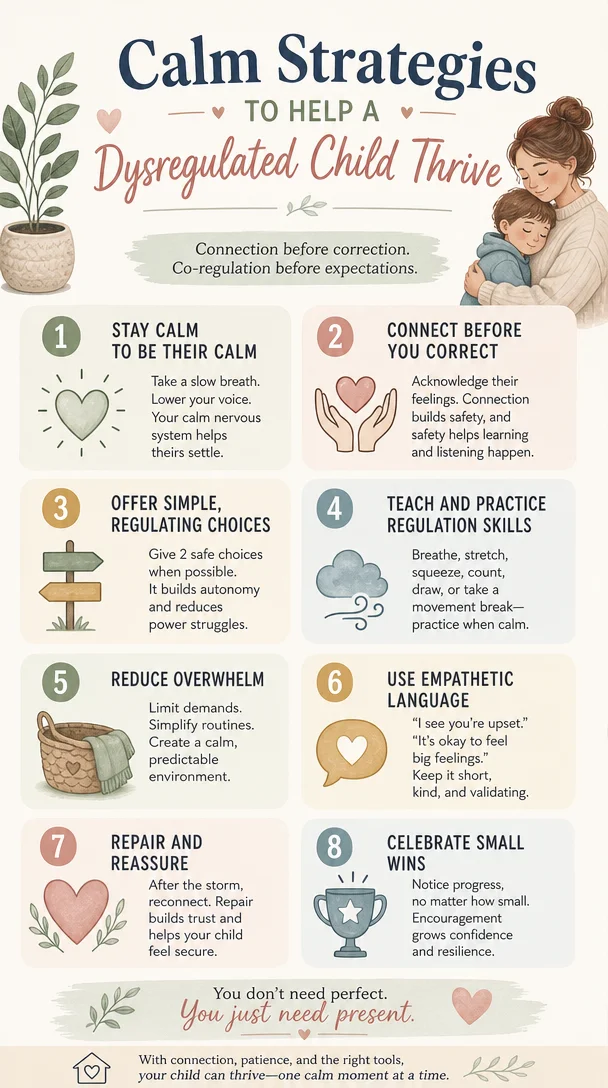
Calm Strategies to Help a Dysregulated Child Thrive
How to Help a Dysregulated Child: 9 Calm Strategies That Work
Meta Description: Discover 9 effective strategies to support a dysregulated child. Practical parenting tips that help create calm moments and emotional connection.
Introduction
Every parent has those days when their little ones seem to be caught in a whirlwind of emotions. One moment, they’re giggling over a game, and the next, they’re overwhelmed by frustration or sadness. If you’ve ever found yourself wondering how to help a dysregulated child, know that you’re not alone. Navigating the ups and downs of toddler emotions can feel like an emotional rollercoaster!
But guess what? It doesn’t have to be overwhelming. By learning a few calm strategies and connecting with your child in those tough moments, you can create a soothing environment that fosters emotional regulation and connection. In this article, I’ll share nine effective approaches to help you support your dysregulated little one.
Let’s take this journey together, sharing our struggles and victories as we learn how to nurture our kids’ emotional well-being.
Understanding Emotional Dysregulation in Kids
Before diving into strategies, let’s take a moment to understand what dysregulation really means. Kids experience big feelings, and sometimes those feelings can spiral out of control. A tantrum, sudden tears, or aggressive behavior often stem from overwhelming emotions, fatigue, hunger, or even the inability to express their needs effectively.
As parents, it’s essential to remember that these moments are not a reflection of failure but an opportunity to guide our children through the chaos. Here are nine calm strategies to help you—and your child—find more balance during these challenging times.
1. Create a Safe Space for Expression
H3: Why This Works
Kids need to feel safe expressing their emotions without fear of judgment. By providing a calm and welcoming environment, you encourage them to share their feelings openly.
H3: How to Do It
Set up a cozy corner in your home with pillows, soft lighting, and a few comforting items like stuffed animals or favorite books. When your child feels overwhelmed, invite them to this space. Use gentle prompts like, “Let’s go to our cozy corner and talk,” to help them transition to a safe space.
2. Practice Deep Breathing Together
H3: Why This Works
Deep breathing helps kids calm their nervous system and regain control over their emotions. It’s a technique they can use throughout their lives.
H3: How to Do It
Turn deep breathing into a fun game! Try the “bubble breathing” method: Pretend to blow bubbles as you inhale deeply and exhale slowly. You can say, “Inhale the smell of yummy cookies, and then let’s blow big bubbles!” This creates a playful moment, easing tension and promoting calmness.
3. Use Visual Aids for Emotions
H3: Why This Works
Sometimes kids struggle to articulate their feelings. Visual aids help them understand and express their emotions better, offering a sense of validation.
H3: How to Do It
Create an emotion chart filled with faces representing different feelings (happy, sad, angry, etc.). You can even personalize it with your child’s drawings! When they seem upset, gently ask, “Which one are you feeling right now?” This encourages open conversations about their emotions without the pressure.
4. Establish Consistent Routines
H3: Why This Works
Kids thrive on predictability. Having a consistent daily routine helps them know what to expect, reducing anxiety and emotional outbursts.
H3: How to Do It
Map out your daily routine with your child, including mealtimes, playtimes, and quiet times. Use a colorful chart or a digital calendar with visual icons. Share it with them, and refer back to it whenever you sense their emotions rising, saying, “I think we should move to our quiet time now!”
5. Encourage Physical Activity
H3: Why This Works
Physical movement releases pent-up energy and frustrations, leading to emotional relief and calmness.
H3: How to Do It
Incorporate regular physical activities into your daily routine, like family walks, dance parties in the living room, or obstacle courses in the backyard. You can say, “Let’s run like we’re superheroes!” to turn movement into an exciting challenge.
6. Offer Comfort Items
H3: Why This Works
Comfort items can provide a sense of security during dysregulation, helping kids regain their composure.
H3: How to Do It
Encourage your child to choose a beloved stuffed animal, blanket, or fidget toy—something they can hold onto when feelings overwhelm them. You might say, “Would you like to hold Mr. Bear while we talk about what’s wrong?”
7. Use Positive Reinforcements
H3: Why This Works
Acknowledging and celebrating small victories can create a more positive environment and motivate your child to regulate their emotions.
H3: How to Do It
When your child manages to express their feelings or calm down after a challenge, offer praise and encouragement: “I’m so proud of you for telling me how you feel! You did such a great job!” This recognition fuels their self-esteem and willingness to communicate in the future.
8. Implement a Calm Down Routine
H3: Why This Works
A clear routine for calming down empowers children to take ownership of their emotions and navigate difficult moments.
H3: How to Do It
Together, come up with a “Calm Down Plan.” It could include a combination of deep breaths, hugging a stuffed animal, or drawing pictures. Share the routine with them, making it a fun and collaborative plan: “What do you think will help you calm down when you feel mad?”
9. Validate Their Feelings
H3: Why This Works
Simply acknowledging your child’s feelings reinforces that their emotions are valid and helps them to feel understood.
H3: How to Do It
When they express frustration or sadness, say things like, “I see you’re really upset right now. It’s okay to feel that way.” By legitimizing their feelings, you build a strong emotional bond and assist them in moving through their dysregulation.
Helpful Tips to Keep in Mind
- Stay Calm Yourself: Your emotional state directly impacts your child’s feelings. Breathe deeply and maintain composure during challenging moments.
- Be Present: Put away distractions and focus solely on your child when they need you. That special one-on-one time can make all the difference.
- Use Books and Stories: Incorporate storytelling to illustrate emotions. Discuss characters in their favorite stories, asking how they might feel in specific situations.
Conclusion
Helping a dysregulated child doesn’t have to be an uphill battle. With these nine strategies, you can create a nurturing and calm environment where your child feels understood and empowered. Every small step you take contributes to their emotional growth and confidence.
Remember, parenting is a journey filled with ups and downs. You are doing an amazing job, even on the hardest days. Keep celebrating those small wins, and know that every effort makes a difference. Grab your child’s hand, remind them they’re not alone, and walk this path of emotional understanding together. You’ve got this!
Optional FAQ Section
Q: What if my child doesn’t respond to these strategies?
That’s okay! Every child is unique. Try to experiment with different strategies and stay patient as you discover what works best for your child.
Q: How can I model emotional regulation for my child?
Talk freely about your feelings and how you manage them. Use your moments of dysregulation as teaching opportunities, explaining how you calm down and move forward.
Q: Are there resources for further learning?
Absolutely! Consider books on gentle parenting, emotional intelligence, or child development to deepen your understanding and skills.
Save this for later 📌 Practical parenting tips backed by child development research. More at monstie.ink #ParentingTips #GentleParenting #ChildDevelopment #MindfulParenting

From Control to Connection: 20 Practical Ways to Parent with Heart
20 Ways to Choose Connection Over Control in Parenting
Meta Description: Discover 20 practical ways to choose connection over control in parenting, fostering trust and understanding with your children while reducing overwhelm.
Hey there, parent! ✨ If you’re anything like me, you’ve probably experienced that deep, gut-wrenching feeling when your child pushes back—whether it’s over a simple request for them to put on their shoes or a more complicated topic like sharing their toys. Those moments can be frustrating, and it’s easy to feel that tug toward control. But what if you could choose connection instead?
Choosing connection over control in parenting shifts our focus from trying to manage behavior to nurturing relationships. This approach not only helps create stronger bonds with our children but also supports their emotional development. Every small shift we make toward empathy, understanding, and responsiveness transforms our parenting journey into a more harmonious experience.
Let’s dive into 20 practical ways to shift gears and prioritize connection in your parenting. Because who says we can’t have both happy kids and moments of joy for ourselves?
1. Slow Down and Listen to Your Child
One of the simplest yet most effective ways to connect is by actively listening. When your little one talks, pause and make eye contact. It may seem small, but genuinely listening communicates to them, “Your words matter.”
Helpful Tip:
Set aside a few minutes every day for uninterrupted conversation. You might be surprised by what they choose to share—adventures from school, their favorite fairy tale, or that funny thing their friend did.
2. Practice Empathy in Parenting
Try to see the world through your child’s eyes. Empathy not only fosters understanding but also builds a safe emotional space for your kids. When your toddler throws a tantrum over a broken toy, instead of saying, “It’s just a toy,” pause and acknowledge their feelings.
Example Conversation:
Instead of: “Stop crying! You can get another toy.”
Try: “I see you’re really upset about your toy. It’s okay to be sad. Want to talk about it?”
3. Respond Instead of React
We all have moments where our patience wears thin. When conflict arises, take a deep breath before responding. This allows you to approach the situation calmly rather than reactively, giving you space to consider your child’s perspective.
Actionable Idea:
Count to five in your head or take a sip of water before responding to a challenging behavior. It helps maintain your calm and puts you in a better position to connect.
4. Nurture Cooperation Instead of Control
Fostering cooperation builds teamwork between you and your child. Instead of demanding compliance, invite them to work together with you.
Practical Example:
Instead of saying, “Clean up your toys!” say, “Let’s clean up together and see how fast we can do it.” Make it a game!
5. Handle Misbehavior Gently
When misbehavior happens, approach it with curiosity rather than anger. Understanding the ‘why’ behind their actions can lead to teaching moments that strengthen your relationship.
Insight:
If your child refuses to share, instead of punishing, explore why: “I notice you’re holding tight to your toy. Can you tell me why you don’t want to share right now?”
6. Maintain Calm and Patience
Children thrive when they see their parents model calmness. Practicing deep breathing or mindfulness can help you maintain your calm, even amidst the chaos.
Self-Care Tip:
Set up a short calming routine for yourself, like deep breathing exercises, before facing potentially chaotic or stressful moments with your kids.
7. Build Stronger Bonds with Kids
Invest time in activities that strengthen your bond. Whether it’s baking together or sharing a story, these moments build connection naturally.
Fun Family Idea:
Plan a weekly “family fun night” with games or arts and crafts. Create memories together that become part of your shared family story.
8. Understand Emotional Regulation for Parents
Modeling emotional regulation sets a powerful example for your kids. Share your feelings openly: if you’re frustrated, say it! Show them that emotions are a natural part of life.
Encouraging Phrase:
“When I feel upset, I take a moment to breathe and think. You can do that too!”
9. Foster Trust with Your Child
Trust grows when children feel safe to express themselves. Encourage open conversations about feelings and thoughts without judgment.
Trust-Building Tip:
Celebrate honesty. If your child admits to a mistake, praise their courage to share rather than the mistake itself.
10. Reduce Mom Overwhelm
Embrace the idea that it’s okay to ask for help—whether it’s from your partner, friends, or family. Sharing the load can help you stay present and connected.
Actionable Idea:
Create a support network of fellow parents. Plan playdates where you share responsibilities—I promise it makes parenting more manageable and fun!
11. Stay Patient During Conflicts
When conflicts arise, remember that patience is essential. Count to ten and if you notice your energy levels rising, take a break if possible.
Example Tip:
“Let’s take a quick break and regroup in five minutes.” This can defuse tension and help you both come back with a fresh perspective.
12. Create Meaningful Moments Without the Overwhelm
Fostering connection doesn’t require elaborate plans. It’s often the simplest moments that lead to lasting memories.
Thoughtful Idea:
Start a gratitude jar together. Each week, have your kids write down their favorite moments. Review them together at the end of the month for a feel-good family night!
13. Use Positive Discipline Techniques
Rather than control or punishment, turn to positive discipline strategies, which focus on teaching and learning. This helps children respond well to guidance.
Practical Strategy:
Instead of timeouts, try redirecting their energy. If they’re acting out, suggest an alternative—like moving to a different room to play or engaging in a calming activity.
14. Slow Down Family Routines
Rushing through the day often invites stress and breakdowns. Embrace the beauty of a slower pace. Be present in morning rituals, mealtime, and bedtime routines.
Example Routine:
Create a ‘slow morning’ where you allow extra time for breakfast and share stories, setting a positive tone for the day.
15. Celebrate Small Wins
Every improvement counts, so celebrate little victories! This will help foster a positive atmosphere and encourage your child to keep trying.
Celebratory Idea:
Create a small achievements chart at home. Every time your child accomplishes something—tying their shoes, cleaning their room—mark it on the chart and celebrate together!
16. Encourage Emotional Expression
Teach your children to express their feelings verbally. Help them name their emotions and experience them fully. This lessens the likelihood of emotional outbursts.
Engaging Activity:
Use feelings flashcards to help your child identify and articulate their emotions. It’s a fun and interactive way to foster emotional intelligence.
17. Be Mindful in Your Interactions
Let’s be honest: busy lives lead to distracted parenting. Challenge yourself to be fully present whenever you engage with your child.
Mindful Parenting Tip:
Set specific “no phone times” for family interactions. When your child speaks, put everything aside and listen.
18. Rebuild Connection After Conflict
It’s completely normal to face bumps in the road. After a conflict, take time to reconnect. This means acknowledging what went wrong and finding ways to mend the emotional ‘rift’ that occurred.
Restorative Idea:
Engage in a fun activity together to rebuild that connection. This could mean a favorite game, a walk in the park, or cooking together.
19. Foster Independence
Letting your child make their own choices builds both confidence and connection. Offer them age-appropriate choices throughout the day.
Example:
Instead of simply telling them to pick out their clothes, say, “Would you like to wear the red shirt or the blue one today?” It allows them to feel empowered!
20. Stay Open to Change
Finally, embrace flexibility in your parenting style. As children grow, so do their needs. Your willingness to adapt and grow along with them fosters an unshakeable bond.
Encouraging Thought:
Remind yourself it’s okay to learn alongside your child. “Wow! I didn’t realize that. Let’s explore this together!”
Conclusion
Choosing connection over control isn’t just a parenting strategy; it’s a mindset shift that allows for deeper relationships, trust, and emotional safety within your family. With these 20 strategies, you’ll discover how each small action can lead to a more harmonious, joyful life with your kids.
Remember, parenting is a journey filled with imperfect moments, and that’s okay! Celebrate the little things, be patient with yourself, and know that you are not alone. Together, let’s create a nurturing environment where connections flourish, and children thrive.
Now, go grab that snack, take a deep breath, and remember, you’ve got this! 💛

28 Mom Hacks That Save Your Sanity
Motherhood is beautiful, emotional, rewarding… and absolutely exhausting sometimes.
One minute you’re packing lunches, folding laundry, and searching for missing socks. The next minute someone spills juice on the couch while the toddler screams because their banana broke in half. If you’ve ever hidden in the bathroom for two minutes of peace while eating chocolate in secret, you are definitely not alone.
The truth is, moms deserve shortcuts.
You don’t need to do everything the hard way to be an amazing parent. Small systems, clever tricks, and realistic routines can completely change your day. The right mom hacks help you save time, reduce stress, avoid chaos, and protect your sanity during busy seasons of life.
These aren’t impossible “Pinterest perfect” ideas either. These are practical, real-life mom hacks that busy parents actually use.
Whether you’re raising toddlers, school-age kids, or a whole house full of tiny tornadoes, these simple ideas can make everyday life smoother and calmer.
Grab your coffee before someone reheats it in the microwave for the third time, and let’s dive into these sanity-saving mom hacks.

1. Prep Tomorrow the Night Before
Morning chaos feels ten times worse when everyone searches for shoes, backpacks, and lunchboxes at the same time.
Spend 15 minutes every evening preparing for the next day:
- Lay out clothes
- Pack lunches
- Fill water bottles
- Set backpacks by the door
- Charge devices
Future-you will feel incredibly grateful.
2. Keep Snack Bins at Kid Level
Create a low fridge drawer or pantry basket filled with approved snacks your kids can grab independently.
Ideas include:
- String cheese
- Yogurt pouches
- Apple slices
- Granola bars
- Crackers
- Fruit cups
This hack reduces constant “Mom, can I have a snack?” interruptions all day long.
3. Use Laundry Baskets for Everything
Laundry baskets aren’t just for clothes anymore.
Use them to:
- Carry toys room to room
- Sort clean laundry quickly
- Hold sports gear
- Organize car items
- Store stuffed animals
Every mom eventually discovers that baskets solve half of life’s problems.
4. Rotate Toys Instead of Keeping Everything Out
Too many toys overwhelm kids and create giant messes.
Store half the toys away and rotate them every few weeks. Suddenly, old toys feel brand new again.
Bonus:
Kids actually play longer when fewer options exist.
5. Create a “Get Out the Door” Station
Place a basket or command center near the front door for:
- Shoes
- Backpacks
- Keys
- Sunglasses
- Diaper bag
- Jackets
This simple system cuts down on frantic morning searches dramatically.
6. Double Your Dinner on Busy Nights
Whenever you cook:
- Make extra pasta
- Double casseroles
- Freeze soups
- Prep extra chicken
Future dinners become much easier when you already have freezer meals ready.
Some nights, frozen leftovers truly feel like a gift from heaven.
7. Keep Emergency Supplies in the Car
Every mom needs a “just in case” car stash.
Include:
- Wipes
- Extra clothes
- Snacks
- Diapers
- Phone charger
- Band-aids
- Water bottles
- Plastic bags
Because eventually someone WILL spill, puke, cry, or have a bathroom emergency.
Probably all in the same trip.
8. Use Muffin Tins for Snack Time
Kids love snack trays.
Fill muffin tins with:
- Fruit
- Crackers
- Cheese cubes
- Pretzels
- Veggies
- Mini treats
It turns ordinary snacks into something fun while reducing requests for multiple separate plates.
9. Set Timers for Cleanup
Kids respond surprisingly well to “beat the timer” games.
Instead of saying:
“Clean your room.”
Try:
“Let’s see how much we can clean in 5 minutes!”
Suddenly cleanup feels less overwhelming and more exciting.
10. Make Simple Meal Themes
Decision fatigue is real.
Assign themes to each night:
- Taco Tuesday
- Pasta Wednesday
- Pizza Friday
- Soup Sunday
This trick makes meal planning dramatically easier.
You no longer stare into the fridge wondering what to cook at 5 PM.
11. Store Complete Outfits Together
For younger kids, keep entire outfits together:
- Shirt
- Pants
- Socks
- Underwear
Morning dressing becomes faster and less stressful.
No more hunting for matching socks while your toddler runs away naked.
12. Use a Shower Caddy for Road Trips
A plastic shower caddy works perfectly for:
- Snacks
- Coloring supplies
- Small toys
- Headphones
- Tissues
Each child gets their own travel station.
This hack can seriously save your sanity during long drives.
13. Keep a “Bored Basket”
Fill a basket with:
- Coloring books
- Puzzles
- Sticker books
- Fidget toys
- Crafts
Only bring it out during desperate moments:
- Rainy afternoons
- Long appointments
- Sick days
- School breaks
Novelty makes it magical.
14. Freeze Leftover Smoothies into Popsicles
Kids suddenly love healthy food when it comes on a stick.
Pour leftover smoothies into popsicle molds for easy snacks later.
This reduces food waste while creating something fun and refreshing.
15. Use Velcro Labels for Chores
Visual chore systems work wonders for kids.
Use Velcro charts with simple tasks like:
- Brush teeth
- Feed dog
- Make bed
- Put away toys
Kids feel proud moving tasks into the “done” section.
And moms stop repeating themselves 900 times daily.
16. Create a “Mom Emergency Kit”
Every mom deserves a small survival kit.
Keep one in your purse with:
- Pain reliever
- Lip balm
- Chocolate
- Hair ties
- Mini deodorant
- Gum
- Stain remover pen
Tiny comforts matter on hard days.
17. Buy Multiples of Favorite Items
If your child loves a certain stuffed animal, blanket, or cup…
Buy backups.
Trust me on this one.
Nothing destroys bedtime faster than losing “the special bunny” five minutes before lights out.
18. Use Sheet Pan Meals for Easy Cleanup
Busy moms don’t need mountains of dishes every night.
Throw protein and veggies onto one sheet pan:
- Chicken and broccoli
- Sausage and potatoes
- Salmon and asparagus
Dinner becomes faster, easier, and much less messy.
19. Keep Cleaning Wipes Everywhere
Put wipes in:
- Bathrooms
- Kitchen
- Car
- Bedrooms
- Diaper bag
Quick cleanups become much easier when supplies stay nearby.
Because messes always happen immediately after you sit down.
20. Teach Kids Independence Early
Even toddlers can help with simple tasks:
- Throw away trash
- Put toys away
- Carry laundry
- Wipe spills
Helping builds confidence while reducing your workload over time.
You do not need to do everything yourself.
21. Use a Shared Family Calendar
Whether you use:
- A wall calendar
- Phone app
- Magnetic fridge planner
Keep all appointments, practices, and events in one place.
Mom brain already holds too much information.
Don’t rely on memory alone.
22. Make “Quiet Time” Non-Negotiable
Even when naps disappear, quiet time still matters.
Set aside 30–60 minutes daily for:
- Reading
- Independent play
- Resting quietly
Kids recharge.
Moms recharge.
Everyone survives the afternoon better.
23. Keep Bath Toys in Mesh Bags
Wet toys become gross quickly.
Store them in hanging mesh bags so they dry properly between baths.
Bonus:
Cleanup becomes faster too.
24. Let Go of Perfection
This may be the most important mom hack of all.
Your house does not need to look perfect.
Your meals do not need to be gourmet.
Your kids do not need matching outfits every day.
Sometimes survival IS success.
A peaceful mom matters more than a spotless kitchen.
25. Use Audiobooks During Difficult Moments
Audiobooks work magic during:
- Car rides
- Quiet time
- Sibling fights
- Chores
- Rainy afternoons
They entertain kids while reducing screen time battles.
Many families end up loving audiobook time together.
26. Create a Simple Reset Routine
At the end of each day, spend 10 minutes resetting your home:
- Clear counters
- Start dishwasher
- Fold blankets
- Put toys away
Waking up to a semi-clean house feels incredibly calming.
Tiny daily resets prevent giant overwhelming messes later.
27. Say “Yes” to Easier Shortcuts
Use paper plates sometimes.
Buy pre-cut vegetables.
Order groceries online.
Accept help.
Skip unnecessary pressure.
Modern motherhood already asks so much from women.
Convenience does not make you lazy.
It makes you resourceful.
28. Protect Time for Yourself
You cannot pour from an empty cup.
Even 15 minutes matters:
- Read a book
- Drink coffee alone
- Take a walk
- Watch a show
- Sit in silence
- Call a friend
Moms deserve care too.
Taking care of yourself helps you show up better for everyone else.
Final Thoughts
Motherhood feels overwhelming sometimes because it truly is overwhelming sometimes.
You juggle schedules, emotions, meals, laundry, appointments, homework, tantrums, and endless responsibilities every single day. That’s why small systems and practical shortcuts matter so much.
These mom hacks won’t magically remove every stressful moment, but they can make daily life feel lighter, calmer, and more manageable.
And remember this:
You do not need to be a perfect mom.
You simply need to be a loved one.
Some days the dishes pile up.
Some days dinner comes from the freezer.
Some days your biggest accomplishment is keeping everyone alive and reasonably clean.
That still counts.
Actually, that counts a lot.
So take the shortcut.
Buy the convenience item.
Use the hack.
Lower the pressure.
Protect your peace whenever possible.
Because a sane mom is a powerful thing.
And you deserve that kind of peace too.

17 Life-Saving Tips for Parenting a Difficult Toddler
Parenting a Difficult Toddler: You’re Not Alone
Some toddlers walk through life like tiny sunshine-filled cupcakes.
Others?
They wake up ready to negotiate world domination before breakfast.
If you’re parenting a difficult toddler, you probably know the feeling of walking on eggshells one minute and cleaning applesauce off the ceiling the next. One tiny disagreement about the “wrong” color cup can suddenly turn into a full-blown emotional hurricane.
And honestly? It can feel exhausting.
Toddlers are strong-willed, emotional, impulsive, and still learning how to process big feelings. Add stubbornness, sleep struggles, sensory sensitivities, or endless power battles into the mix, and everyday parenting can start feeling overwhelming.
But here’s the good news: difficult toddlers are not “bad kids.”
They’re usually intense, passionate, curious, emotionally reactive little humans who need guidance, connection, and consistency more than punishment or perfection.
The toddler years can absolutely test your patience, but they can also become a season of incredible bonding and growth when you have the right tools.
These life-saving parenting tips will help you:
- reduce tantrums
- avoid constant power struggles
- build stronger communication
- create calmer routines
- protect your own mental health
Let’s dive in.

1. Stay Calm Even When Your Toddler Isn’t
This one sounds simple… until your toddler screams because you peeled the banana “wrong.”
Difficult toddlers often feed off emotional energy. When you raise your voice, react angrily, or panic, their nervous system usually escalates too.
Your calm becomes their anchor.
That doesn’t mean you need to act like a zen monk 24/7. You’re human. Parenting is hard. But slowing your breathing, lowering your tone, and responding instead of reacting can completely change the direction of a meltdown.
Instead of:
- “STOP CRYING RIGHT NOW!”
Try:
- “I know you’re upset. I’m here to help.”
A calm response teaches emotional regulation far more effectively than yelling ever will.
2. Pick Your Battles Wisely
Not every issue deserves a showdown.
Many parenting battles happen because toddlers crave independence. They want control over tiny things because the world feels huge and overwhelming.
Ask yourself:
- Does this actually matter?
- Is this a safety issue?
- Is this worth a meltdown?
Sometimes saying “yes” saves everyone’s sanity.
Examples:
- mismatched socks
- breakfast for dinner
- wearing rain boots in summer
- carrying five random rocks everywhere
Save firm boundaries for important things like safety, kindness, and health.
When you stop battling over every little thing, difficult toddlers often become more cooperative overall.
3. Give Choices Instead of Commands
Toddlers love feeling powerful.
Constant orders can make strong-willed toddlers resist automatically, even when they actually want to cooperate.
Instead of demanding compliance, offer simple choices.
Try:
- “Do you want the blue pajamas or the green ones?”
- “Would you like to hop to the bathroom or tiptoe like a mouse?”
- “Do you want apple slices or strawberries?”
Choices create cooperation because your child feels included instead of controlled.
Just keep choices:
- simple
- limited
- realistic
Too many options can overwhelm toddlers quickly.
4. Create Predictable Routines
Difficult toddlers often thrive with structure.
When toddlers know what comes next, they feel safer and more secure. Predictability reduces anxiety, transitions become easier, and meltdowns often decrease dramatically.
You don’t need a rigid military schedule.
Simple routines work beautifully:
- wake up
- breakfast
- playtime
- snack
- outside time
- lunch
- nap/quiet time
- dinner
- bath
- bedtime
Visual routines can help too. Some toddlers respond incredibly well to picture charts showing daily activities.
Routines reduce power struggles because the routine becomes “the boss” instead of you.
5. Connect Before You Correct
This tip changes everything.
When toddlers feel disconnected, misunderstood, tired, or emotionally overwhelmed, they’re far more likely to act out.
Before correcting behavior, build connection first.
Get on their level.
Make eye contact.
Use a gentle touch.
Acknowledge feelings.
Instead of:
- “Quit whining!”
Try:
- “You’re frustrated because playtime ended. That’s hard.”
Connection helps toddlers feel emotionally safe enough to cooperate.
Remember:
A regulated child learns better than a shamed child.
6. Watch for Hidden Triggers
Sometimes “bad behavior” is really unmet needs in disguise.
Difficult toddler behavior often worsens because of:
- hunger
- overtiredness
- sensory overload
- boredom
- too much screen time
- overstimulation
- lack of outdoor play
- sudden transitions
Start noticing patterns.
Does your toddler melt down every afternoon?
Do grocery stores overwhelm them?
Do transitions trigger chaos?
When you identify triggers, you can prevent many meltdowns before they start.
Snack breaks, quiet time, outdoor movement, and earlier bedtimes can work wonders.
7. Stop Overexplaining During Tantrums
During a meltdown, your toddler’s brain is emotionally flooded.
That means long lectures won’t work.
In fact, too much talking often makes tantrums worse.
Keep your words:
- short
- calm
- reassuring
Try:
- “You’re safe.”
- “I’m here.”
- “I know you’re upset.”
- “We’ll figure it out together.”
Save teaching moments for later when your child feels calm again.
A dysregulated toddler cannot process logic effectively.
8. Use Play to Diffuse Tension
Toddlers live in a world of imagination and play.
Sometimes silliness works better than discipline.
If your toddler refuses to brush teeth:
- make the toothbrush talk
If they refuse shoes:
- pretend the shoes are hungry for feet
If cleanup becomes a battle:
- turn it into a race or game
Play lowers defensiveness and invites cooperation naturally.
Difficult toddlers especially respond well to humor because it shifts emotional energy quickly.
Never underestimate the power of acting goofy.
9. Set Clear and Consistent Boundaries
Gentle parenting does not mean permissive parenting.
Difficult toddlers actually need clear boundaries to feel secure.
The key is staying:
- calm
- consistent
- confident
Avoid endless warnings or changing rules based on your mood.
Instead of:
- “If you do that again maybe we’ll leave…”
Try:
- “Throwing toys isn’t safe. The toy goes away if you throw it again.”
Then calmly follow through.
Consistency builds trust because toddlers learn what to expect.
10. Praise the Behavior You Want More Of
Many parents accidentally spend most of the day correcting negative behavior.
But toddlers crave attention — even negative attention.
Try catching your child doing something right.
Notice:
- kindness
- patience
- cooperation
- problem-solving
- effort
Instead of generic praise like:
- “Good job!”
Try specific encouragement:
- “You put your shoes away all by yourself.”
- “I noticed how gently you played with your sister.”
- “You calmed your body down. That was amazing.”
Specific praise reinforces positive behavior far more effectively.
11. Don’t Take Toddler Behavior Personally
This one matters deeply.
Toddlers are not trying to ruin your life.
Even though it may feel that way during the fifth meltdown of the day.
Difficult toddler behavior usually reflects:
- emotional immaturity
- frustration
- impulsivity
- communication struggles
- developmental growth
Your child is not giving you a hard time.
They are having a hard time.
When you stop viewing behavior as manipulation or disrespect, your responses become calmer and more compassionate.
That shift changes everything.
12. Teach Emotional Vocabulary Early
Toddlers often act out because they don’t have words for what they feel.
Help your child identify emotions regularly.
Use phrases like:
- “You seem frustrated.”
- “That made you sad.”
- “You’re excited!”
- “You feel angry because the tower fell.”
Books about feelings help too.
When toddlers learn emotional language, tantrums often become less intense over time because communication improves.
Naming feelings also teaches self-awareness and emotional intelligence.
13. Prioritize Sleep Like Your Life Depends on It
Because honestly… sometimes it feels like it does.
An overtired toddler can become wildly emotional, aggressive, clingy, and explosive.
Sleep deprivation affects:
- emotional regulation
- impulse control
- mood
- behavior
Protect naps and bedtime routines whenever possible.
Helpful bedtime habits include:
- dim lighting
- calming baths
- consistent bedtime
- no overstimulating screens before sleep
- quiet books or cuddles
Sometimes improving sleep alone dramatically improves toddler behavior.
14. Get Outside Every Day
Toddlers need movement like plants need sunlight.
Outdoor play helps regulate:
- mood
- energy
- emotions
- sleep
- sensory systems
Even difficult days feel easier after fresh air and movement.
You don’t need elaborate activities either.
Simple outdoor fun works:
- nature walks
- playgrounds
- chalk drawing
- puddle jumping
- backyard play
- kicking a ball
Many toddler meltdowns shrink dramatically after active outdoor time.
15. Model the Behavior You Want to See
Toddlers copy everything.
Including how adults handle stress.
If you yell constantly, your toddler learns yelling.
If you slam doors, they learn explosive reactions.
If you apologize calmly, they learn accountability.
Model:
- deep breathing
- calm communication
- emotional regulation
- kindness
- patience
That doesn’t mean pretending to be perfect.
In fact, repairing after mistakes teaches powerful lessons.
You can say:
- “I got frustrated earlier. I’m sorry I yelled. I’m working on staying calm too.”
That teaches emotional growth beautifully.
16. Take Care of Yourself Too
You cannot pour from an empty cup.
Parenting a difficult toddler can feel mentally and emotionally draining, especially when you rarely get breaks.
Your needs matter too.
Try to prioritize:
- rest when possible
- hydration
- supportive friendships
- small moments alone
- realistic expectations
- asking for help
You do not need to be a perfect parent.
You only need to be a good-enough parent who keeps showing up with love.
Some days survival is enough.
And honestly? That counts.
17. Remember That This Stage Will Not Last Forever
This season feels endless when you’re in it.
The tantrums.
The defiance.
The emotional explosions in public places.
The exhaustion.
But toddlerhood is temporary.
Strong-willed toddlers often grow into:
- confident leaders
- passionate creators
- determined problem-solvers
- independent thinkers
The qualities that challenge you now may become their greatest strengths later.
One day, your toddler won’t need you to carry them, comfort them after every tiny heartbreak, or read the same bedtime story fifteen times in a row.
And strangely enough… you may even miss parts of this chaotic season.
So breathe deeply.
Celebrate small wins.
Give yourself grace.
You are doing better than you think.
Final Thoughts on Parenting a Difficult Toddler
Parenting a difficult toddler can stretch your patience in ways you never imagined.
But it can also teach you incredible lessons about empathy, flexibility, emotional growth, and unconditional love.
The goal is not raising a “perfect” child.
The goal is helping your toddler learn:
- emotional regulation
- communication
- resilience
- trust
- connection
Some days will still feel messy.
Some tantrums will still happen in Target.
Some bedtime routines will still end in tears.
That’s normal.
Progress matters more than perfection.
Start with just one or two tips from this list and practice them consistently. Small changes often create huge shifts over time.
And remember:
You are not failing because parenting feels hard.
You’re raising a tiny human with big emotions — and that’s one of the hardest jobs in the world.